Members of the page - including free members - get access one week early!
Showing posts with label my writing. Show all posts
Showing posts with label my writing. Show all posts
Sunday, July 14, 2024

Monday, May 27, 2024
Untitled Beauty and the Beast Retelling
Mira weeps.
She has not, these last few days. She has not let herself. But now she’s alone, in her private hollow in the woods, and no one will search for her for a quarter hour, at least.
A twig snaps.
Mira looks up. Standing before her is a great beast, seven feet tall at least, his antlers adding another foot or two. He has glossy dark fur, and a snout the looks somehow like both a bear’s and a deer’s. Horrifying and majestic, like a forest god of old.
“Hello,” he says.
She stares at him for a long moment before recovering her manners. “Oh! Hello.”
“You’re upset.”
“Um. Yes.” She really does not want to explain the situation to a monster in the woods.
He stares at her for nearly as long as she stared at him, when he first spoke. “You want to get away,” he says at last, half a question. It sounds like an offer.
“Oh, yes,” Mira says, her need for escape overwhelming both reason and fear. “But I can’t. my family is depending on my marriage. We need the bride price desperately.”
“And do you want to be married?”
She thinks of Ralph, of his bright smile and soft hands. She thinks of Ralph three days ago, when he— “No.”
The creature nods. “What is your bride price? I will pay it double, and take you away, and you needn’t be my bride.”
She studies the monster. He has no reason to help her, and she has no reason to trust him. He may be lying, about her not being his bride. He may plan to eat her instead.
She cannot stay here.
“You’ll have to speak with my father,” she says.
He nods.
“I am Mira. What shall I call you?”
He doesn’t answer for a long moment. “I don’t have a name,” he says. “You may call me Beast; it is what I am.”
-
The Beast speaks with her father in the doorway; his antlers prevent him from fitting inside. Not, Mira thinks, that her father would be inclined to let him in regardless. He closes the door on him, rudely, to discuss his offer.
“You can’t mean to marry a monster.”
“You can’t mean to turn down the bride price he offers, not with Mother sickly, and your only son still in diapers.”
“Young Ralph has—”
“Ralph will offer you half what the Beast has. We’ve made him no promises. Take the better offer.”
“I am not so desperate for gold that I would—”
“I’ll not marry Ralph, Father. Accept the Beast’s offer, or I’ll go with him anyway, and bring shame on the family.”
“He has bewitched you. Mira, child. He’s a monster. He’s—”
Continue reading for free on Patreon! Chapters post weekly; members get access one week early.
Tuesday, August 1, 2023
Shards of Glass: Chapter 1
I lost Kai when we were nine. He went missing when we were seventeen.
He was my best friend and brother and half my heart. It’s funny, how
those feelings don’t go away. He was practically a stranger, by the time he
disappeared, but he was still all those other things, too.
(Manda’s still half convinced I’m in love with him. But Manda’s favorite
game is seven minutes in heaven, and I’d rather get a root canal than go on a
date, so there tends to be a fundamental breakdown in communication when we
talk about that kind of thing.)
Kai never came home Saturday night. His grandma reported him missing
Sunday morning. By Monday—
Monday was a snow day. It had been going on and off since Friday night,
nonstop since Sunday afternoon. My parents were at work, and I wanted to keep
Grandma company, but she was busy, with the police, and the—and I didn’t want
to be in the way. So I heard it from the news, not from her.
Local teen, missing two days. Last seen snowboarding at 3pm on Saturday.
Snowboard washed up on the far side of the river. A glove and a boot found on
the hilltop. Local teen missing, presumed dead.
Kai missing, presumed dead.
Manda called me right after it aired. “I know he was—I’m sorry.”
“Kai’s not an idiot,” I said.
“No one said he was.”
“They did. They just did, on channel six—you think Kai would go down
like that? Into the river? Everyone knows you don’t take the hill at that
angle, because the Mississippi doesn’t always freeze.”
“Okay, but Gerda, if it was already dark when he—”
“He’s not stupid enough to be out in the dark alone, that close to the
river. He’s not, he wouldn’t, Manda. He wouldn’t.”
“Okay,” she said again, humoring me. “So what do you think happened?”
“I don’t know. I just know he’s
not dead. He—he can’t be. Not Kai.”
Kai in the dark, squinting at me behind fogged up glasses. Kai laughing
as he packed a snowball, Kai biking in the sun the day the training wheels came
off, Kai in braces and glowers, Kai calling me names, Kai waiting at the back
door with the snow falling at his back. Not Kai. Not Kai.
He wasn’t dead. He couldn’t be. And that meant I had to find him.
Boots—the heavy black ones that laced in the front. Snow pants—shiny,
black, puffy, ugly, warm. The heaviest coat, the thickest mittens, with thin
gloves beneath. My ice skating socks. Two scarves. That hat Grandma knitted for
me for Christmas. Six granola bars in my pocket.
Kai was a missing person, presumed dead. He was probably more than six
granola bars away.
He wasn’t dead. He couldn’t be. I grabbed a seventh granola bar.
I had walked across town, down the hill,
along the river, and into the woods, deep and deep and deeper, before the cold
seeped into my shoes, before I realized what I was doing.
I sat abruptly on the snowy ground. I was going to search for my
likely-dead evil neighbor, alone, on a Monday afternoon in January, with
nothing but the clothes on my back.
He wasn’t dead. He couldn’t be. I stood up and pulled out the first
granola bar.
~
I’ve spent my whole life one wall away from Kai. Our families live in
the two units of a townhouse, and our bedrooms share a wall. When we were kids
we had a tin can telephone—we used one of Grandma’s needles with the biggest
eye to pull the thread through the screens in our windows, then attached each
end to a can inside our rooms. Whenever one of us wanted to talk, we’d knock on
the wall, and the other would know to go pick up their can.
We had to replace the string a
few times, and the last one fell apart years ago, but the can still lives on my
dresser, with a million other things Mom keeps telling me to throw away.
The last few years, if Kai wanted to talk to me, he’d knock on the wall,
and I’d go downstairs and meet him in the backyard. I don’t knock anymore—I
learned a long time ago that the only way to have a relationship with Kai is on
his terms.
Manda says that’s unhealthy. I say Manda’s a hypocrite—she forgives
people who keep hurting her, too. She says it’s different because Kai’s not my
family. But he might as well be. You don’t stop loving people just because they
become unlovable. I may not have liked Kai much, the last few years. But I’ll
always do anything for the sake of the person he used to be.
~
I know it started when we were nine, the trouble. That was the year Kai
got glasses. It was also the year he got mean. (Unrelated.) He just got meaner
and meaner. He had a special talent for mimicry that showed up that year, and
he just—
There was a huge rosebush between our front doors, and it made the
biggest, brightest, best-smelling red roses I’ve ever seen, prettier even than
the ones you can get from a florist. We were sitting just in front of it, holding
very, very still, because there were a bunch of bees around. (Kai always liked
bees.) And all of the sudden he shouted.
I asked him if he’d got stung, and he shook his head. “Feels like
something flew into my eye.”
A minute later a bee landed on his hand, and he caught it—grabbed it by
the wings.
“What are you doing?”
He shrugged. “I wanted a closer look,” he said. And he held it up really
close to his face—I think he needed the glasses by then—but it was struggling,
so it was hard to really look at. So he grabbed the stinger and pulled it
out—because losing their stingers kills them—and then it wasn’t moving anymore,
and he could get a better look.
And it was so mean, and I was shouting at him, and then he just—dropped
it, and he said, “I don’t—I don’t know why I did that. I’m sorry. I didn’t mean
to.”
We dug a little hole and buried the bee under the oak tree in the
backyard. But that was when it started. The day he killed that bee. It happened
slowly. He started mocking people and stomping on ants and being rude to
Grandma. But only sometimes. Other times he was nice. Other times he was still
my best friend. And I just kept hoping he’d grow back out of it.
(When your best friend grows up to be a jerk, you never suspect it’s
because of magic.)
~
I was twelve by the time I admitted to myself that Kai and I weren’t
friends anymore. I was sleeping over at his house—we were already a few years
out from being sleepover friends, really. But my parents have always travelled
a lot, and until I turned fifteen and they decided I could stay home alone
overnight, I stayed with Grandma and Kai.
Kai still had his bunk bed back then—one bed for him, and one for a
friend, and that friend was always me.
I don’t even remember what he said. He’d been saying horrible things,
and I’d been trying to ignore them, for a long time by then. I didn’t hang on
to the things he said—I always just tried to forget them as soon as possible.
But whatever he said that night, it upset me, more than the things he said
usually did. It might have been about my parents—my adoptive parents, not my
bio ones. Kai would never go there, even at his worst. Both sets are sore
subjects, but there are lines Kai won’t cross, and there were more of them when
we were twelve.
My parents are my uncle—my bio mom’s brother—and his wife, really. My
bio parents died in a car crash, and they were the only family left. At least,
the only family we know about, because my bio dad was from Taiwan, and no one
knew if he had any family left there or how to contact them. My parents adopted
me because I was family, and it was the right thing to do. They love me, I
think. They’ve had me since before I turned two. But I know they never wanted
kids. So I’m touchy about it. That would have hurt my feelings, more than most
things Kai might have said when we were twelve.
Whatever he said, I climbed down from the top bunk and went to Grandma’s
room; she was sitting up in bed, reading.
“I don’t want to sleep in there. Kai’s being mean.”
Grandma sighed and put down her book. She was hoping he’d grow out of
it, too, but no luck, no matter how many groundings and timeouts and whatever
he got. “Well, maybe you’re getting to be at the age where you shouldn’t be
sharing a room.”
After that I slept on the pullout couch, until Mom and Dad let me just
stay home.
~
I was thoroughly lost and down two granola bars by the time I thought of
Grandma. (His grandma, not mine, not really.) To be told Kai was probably dead,
and then that I’d gone missing—well, they’d probably find my body before Kai’s,
even if he really was dead, because I didn’t go barreling toward the
Mississippi like a first-rate idiot.
We’re all she has left. To lose us both in the same weekend—
And my parents. My parents—I’m the only family they have, too, and
they’d definitely blame themselves if I wandered into the woods and froze to
death when they were both working late again—and I knew I was going to freeze
to death. I was beyond numb. I kept starting to fall asleep, and then the panic
would wake me. I had no idea how long I’d been out—I didn’t have a watch, and
it gets dark so early in the winter, it could have been less than an hour, or
it could have been three or four. No one would miss me probably until
morning—when Mom and Dad got home they’d just assume I was already in bed, so
either they’d find my bed empty in the morning, or they’d leave early and
someone at school would be the first to realize I was gone.
I was going to freeze to death searching for a stupid jerk who was
probably dead already, and there was no way Manda would ever believe I wasn’t
in love with him after this—or anyone else either, and why should that even
matter, when I was about to freeze to death?
~
We live in a cul-de-sac, with a huge circle of grass at the end, where
the turn-around is—I guess it belongs to the city. But we used to build snow
forts there every winter. Me and Kai—we were the only kids on the block, back
then. There are some younger kids now, and I’ve seen them do the same thing.
It was always a huge fort—we’d work on it for weeks. The plow would pile
all the snow from the street there, so we had plenty of material to work with.
We’d dig tunnels into the big piles the plow left. We were in there all day on
weekends, and over Christmas break, until Grandma or my parents came to dig us
out.
Grandma would never come into the fort—she said her knees were too
old—but she used to bring us each a thermos of hot chocolate while we were
working. We’d go into the biggest cavern we’d dug out so far, and sit on the
packed-down snow on the ground, pressed tight together, to drink it. No one
makes hot chocolate like Grandma—I’ve watched her do it, and she just uses the cheap
powder like everyone else, but hers tastes better.
I was sitting on the ground in the woods, imagining Kai was pressed into
my side, thinking of Grandma’s hot chocolate. And I wasn’t cold anymore, and I
knew I was dying.
Then I woke up.
-
Preorders open now on waxheartpress.com!
Sunday, July 9, 2023
Shards of Glass: Meet the Character: The Witch

“No phones here, sweetheart. You’re beyond such things now.”
“Come, come, let me brush your hair. We’ll pull all those nasty, painful thoughts right out of your head.”
The witch lives in a sod roofed cottage in the woods, not far from the border where Minnesota becomes fairyland. She has an enchanted hairbrush and a beautiful garden. She longs for a child, but her fairy lifespan dooms her to outlive any human child she can find and claim for her own. Her quilt is made from the lives of all the children she’s ever had, and so is her garden.
See jennyprater.com for more information on Shards of Glass.
Sunday, July 2, 2023
Shards of Glass: Meet the Characters: The Crow

“I don’t mean to insult you, of course. I am sure that in many matters of concern to yourself, you are quite wise. But you are only human, and have not likely taken steps to resolve your ignorance in matters of ravenly beauty.”
“It doesn’t do to waste meat, but that doesn’t mean I want anyone dead.”
The crow lives in the forest not far from the newspaper palace, and he’s dating another crow who lives at the palace. He thinks he knows more than he does, but he knows enough to aid Gerda in her quest.
See jennyprater.com for more information on Shards of Glass.
Sunday, June 25, 2023
Shards of Glass: Meet the Character: The Ice Fisher Fairy

“When she turned her back to us, I saw she had a tail like a donkey’s or a cow’s, the main part of it just the same color as her skin, and the little tuft at the end matching her hair.”
“I am going to tell you a story older than fairy land itself, just as soon as I’ve caught this fish.”
The ice fisher fairy is a huldra who lives far in the north so that she can go ice fishing all year round. She lives in her fish house, which is bigger on the inside, and communicates with her neighbor by messages sent through sporadic quest-goers. Her mother told her a story, long, long ago, of an enchanted mirror that cursed humanity.
See jennyprater.com for more information on Shards of Glass.
Sunday, June 18, 2023
Shards of Glass: Meet the Characters: Gerda

“You don’t stop loving people just because they become unlovable.”
“I’ve spent my whole life one wall away from Kai.”
Gerda is a 17 year old girl living in Minnesota with her adopted parents, who are her bio uncle and aunt. She is Taiwanese-American. They live in a duplex/townhouse, with Kai and his grandmother in the other unit.
It’s been a long time since they were close, but Kai is still an important part of Gerda’s life, and she’s not ready to give up on him.
She struggles to connect with others, and often feels like an outsider. She likes stories, and roses, and baking with Kai’s grandma.
See jennyprater.com for more information on Shards of Glass.
Sunday, June 11, 2023
Shards of Glass: Meet the Characters: The Reindeer
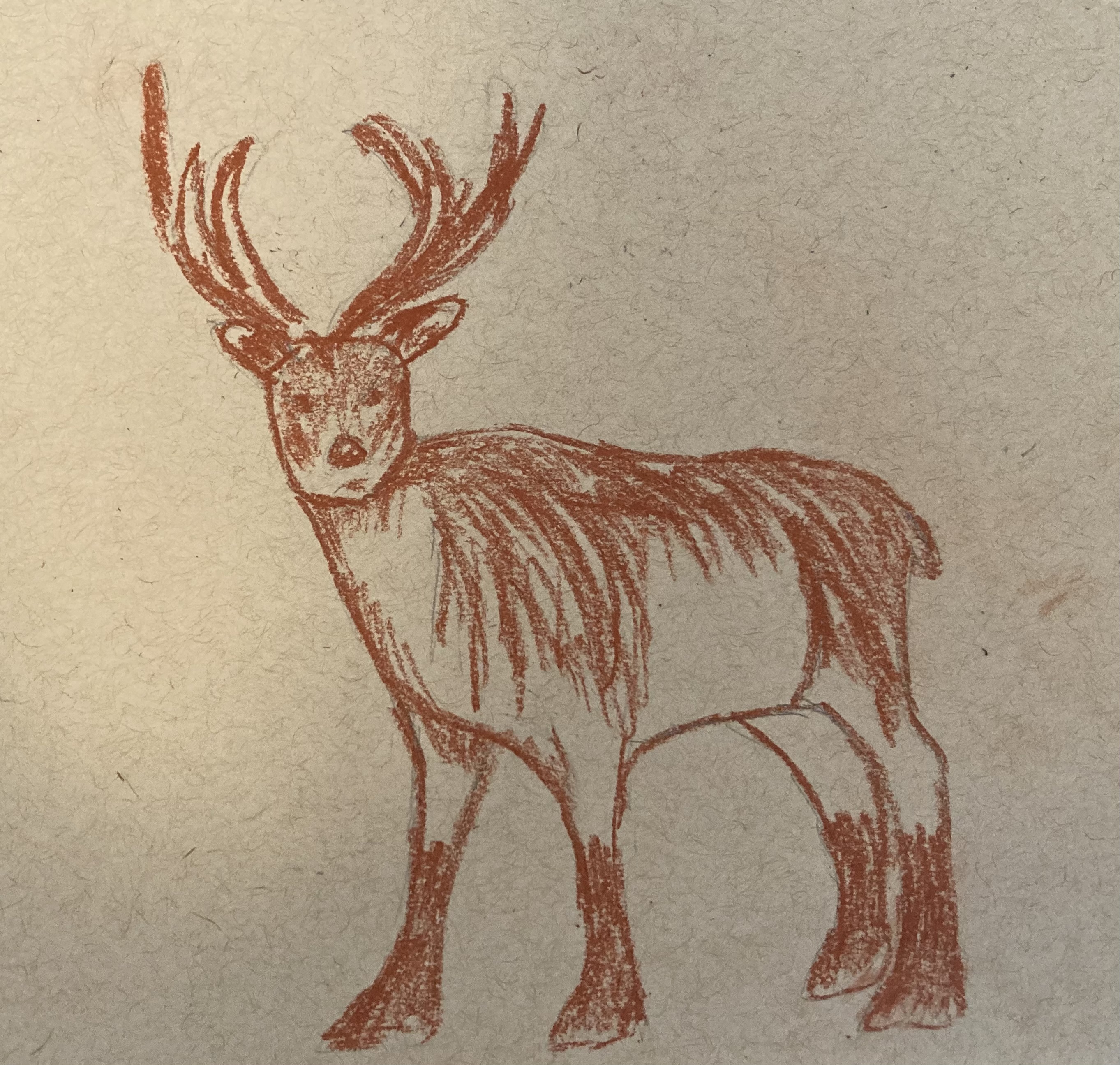
“I am a magical creature, and here in my home I can feed on the cold, though in the city I must eat like you and everyone.”
“I’m sorry - I’m not a brave beast.”
The reindeer has been living in a walk-in closet for a long time. It’s not an ideal living situation, but it would be worse if the closet’s owners learned he could talk. He trusts Gerda with his story, and he’s happy to take her to the Snow Queen’s palace in exchange for his freedom, as long as he doesn’t have to face the Snow Queen himself.
See jennyprater.com for more information on Shards of Glass.
Tuesday, June 6, 2023
Shards of Glass

“When Gerda's neighbor and childhood friend disappears into the Mississippi, she refuses to believe he's dead. A spontaneous rescue mission leads her to a strange new land, full of fairies, trolls, and talking flowers. To find her friend, she must travel through this land, to a palace at the top of the world. But reaching the palace is only the beginning-she has to get him home again, too.”
My second novel, Shards of Glass, will be released on September 26, with preorders opening in early August. Shard of Glass is a retelling of Hans Christian Andersen’s The Snow Queen. Starting in not-quite-modern Minnesota, it follows seventeen-year-old Gerda as she chases after an old friend given up for dead by everyone else.
This is just a quick intro post - we’ll be talking more about both Shards of Glass and The Snow Queen over the course of the summer. Patrons will have access to most posts one week early.
Monday, August 15, 2022
New Project Announcement: Silence
I’ve discovered, through trial and error over the last few years, that it’s a lot easier to actually get writing projects done when I have people waiting to read them. Especially when I’m sharing the projects as I write them. And I don’t have a writing group or anything right now, and I never really know what to do with my Patreon, so I’m going to try doing this:
I’m writing a story right now called Silence. I hope it will be novel-length, but I never really know until I get there. It’s about a mermaid. I would not call it a retelling of The Little Mermaid, but honestly, YMMV on that. Starting next week, I’ll be posting a chapter of this story on Patreon every week. (With possible occasional skipped weeks for holidays, real life interference, etc.)
Silence will be available for everyone, Patrons or not. Patrons will have access to each chapter five days early, and will also have access to occasional bonus content consisting of deleted scenes, outlines, previews, posts about inspiration, posts about the history of this story-type, etc.—basically whatever I feel like, TBH.
One important thing to note here: it’s much easier to stay motivated to write if I’m sharing as I go, but that only works if I know people are reading. So if you’re here, please engage with the posts. Like them or comment—it can be something simple like a heart or a smiley face, or something longer, and I’ll try to respond to any comments, but please keep any criticism constructive and polite. Remember, this is a rough draft that I’m sharing as I write it, and it will go through plenty of editing before standard publication is an option. I’m happy to hear about any issues you notice with the story, so I can make the next draft better, but remember to be nice! (Also, feel free to point out any grammar or spelling issues.)
You do not have to be a Patron to read Silence, but you do need to be a Patron for access to the bonus content. If you are not a Patron, do please consider following my page, which is free!
Chapters will post for Patrons on Sundays and for
non-Patrons the following Friday. Bonus content will post whenever I feel like
it. A proper summary/back cover blurb/whatever is coming soon. Unfortunately
the layout of Patreon is not super convenient for posting writing (I would love
it if I could set things up to feel a little more AO3, a little less
LiveJournal), so I’ll try to set up some sort of master-post where you can
access each chapter easily, but I’m not sure yet if that’ll work.
My Patreon is here.
Wednesday, October 13, 2021
The Girl With No Heart in Her Body
Long, long ago, in the days when dreams walked the earth, there lived a princess who was born with no heart in her body.
Naturally, this caused much consternation among the court. It was decided, after a week, that a ruby would be taken to fill the hole in her chest.
The child grew, as children often do, and she grew into a wicked, selfish thing, her stone heart unmoved by any diversion.
The days turned to months and the months turned to years, and it came time for the princess to be wed. Many men would love a heart of stone, but there were none that a stonehearted maiden could love.
And there came a prince with a quicksilver soul, who always heard yes when he should have heard no.
He contrived to be alone in the princess’ bedchamber one night. She watched his coming with curiosity, for her heart was hardened to fear.
“Princess,” he said, “What sits beneath your breast? For I have heard men call you heartless.”
“I have a heart beneath my breast,” she answered him, “and it shines brighter than yours, by far.”
“Princess,” he said, “I must see this heart. Surely you are not afraid to show it to me?”
“I am not afraid,” the princess said, and she lifted her nightshirt up to her neck, to show the heart her parents had made her.
The prince forgot his lust for greed. He snatched the ruby from her chest, and stowed it in a pouch around his neck, and took himself quickly away.
The princess stared down at the hole in her chest for several minutes. Slowly, she dropped the hem of her nightshirt, and slowly, she put herself back to bed. No one had stolen her heart before. She did not know what to do.
In the morning, the princess found herself tired, and full of an unnamed sorrow, and she did not rise from her bed. Her parents worried, for their daughter was often up with the sun. But she would not rise, and she would not speak. She would not eat, and she would drink only a little water, and that only when her father begged, for every hour that passed took her heart farther from her body.
On the third day, the princess roused herself, and she went to her mother’s jewel box, and tipped it over onto the floor.
The gold and silver she rejected immediately. She lingered over the jewels, sapphires and emeralds and diamonds. But all of these were wrong. She found a garnet broach, and thought, perhaps, perhaps. She found a pair of ruby earrings, and hope flared. But all of these were wrong.
Her heart was a stone the size of her fist. The earrings were each the size of a teardrop, and the garnet no bigger than her eyes, dry, for a girl with no heart could never cry.
The queen was not pleased to find her daughter had gone through her things. The queen was, in fact, altogether quite displeased with her daughter, and the king soon followed suit. For the princess would do nothing but lie abed all day, and refused to attend court functions, and refused to see any suitors.
And days turned to weeks, and weeks turned to months, and there came a dragon to lay waste at the north end of the kingdom.
“Perhaps,” said the king to the queen, “we will marry her to the man who kills the dragon.”
“Perhaps,” said the queen to the king, “but what man would have a wife who lies in bed all day?”
“Perhaps,” said the princess to herself, “the dragon has a jewel large enough to replace my heart.”
And so the princess resolved to save herself from this wasting illness that no one else could see. At first she thought she would ride out to meet the dragon, but her body grew weaker and weaker as long as her ruby heart was gone, for no one could live forever without a heart.
She thought on this for many days, and at last she went back to her mother’s room, and tipped over her jewel box again. She took from it as many things as she could carry, and then, giving up on her weak body, she filled the box again, and called a stable boy to carry it down, and tie it to the back of a large, reliable plow horse. She took herself slowly, next, down to the stables after the boy, and told him to tie her to the horse as well.
She pointed the horse’s large, fuzzy nose to the north, and let herself rest, secure in the stable boy’s knots. Her mother owned many, many fine pieces of jewelry, silver and gold and gems. If she was lucky, the princess thought, the dragon would smell the treasure, and come to meet her. She thought she could reason with a dragon; she still understood no fear.
The princess fell asleep on the back of the horse, and woke on the back of the horse, and drank a little from the skin of water the stable boy had filled for her. She slept again, and woke again, and so she passed many days, until the horse, plodding and reliable until now, suddenly reared up, dislodging princess and jewel box both, and galloped away.
She had reached the dragon’s lair.
The princess stood slowly. She was bruised from the fall, and tired, always tired now, ever since the theft of her heart.
“Hello?” she called. “Is there a dragon here?”
There was no answer.
“I have brought many small treasures,” she said, “which I would trade for one larger, if you are willing.”
A long, red snout emerged from the cave before her, and she stumbled hastily back, for the breath from its nostrils was hot and painful.
The dragon sniffed her. The dragon sniffed the treasure. The dragon said, in a low, rumbling voice, “You are dying, little princess. Why have you come to me?”
“I have come that I might not die,” the princess said. “My heart has been taken, and I would replace it from your hoard.”
“I do not hoard the hearts of girls,” the dragon said.
“I do not seek a heart of flesh,” the princess answered. At this, the dragon picked her up, long yellowed teeth clamped gently about her waist, and pulled her into the cave. After a moment, it went back outside for the jewel box.
“This treasure is not yours, I think.”
“It is my mother’s. She will miss it far more than she will miss me, for I am a heartless, unloving child.”
And the princess lifted her skirts up to her neck, and showed the dragon the hole in her chest. “Once I had a heart of stone,” she said, “but it was stolen by a prince with a quicksilver soul, and without it I think I shall die. Nothing in the box is big enough to do.”
She dropped her skirts and lifted her eyes, to see the shining jewels of the dragon’s hoard. Light from the mouth of the cave bounced from each bright surface to the next, but the princess knew no greed, only hope.
“Will you help me?” she asked the dragon.
The dragon knelt to rest her snout above the hole where a heart should lie, and the heat of her warmed the empty chest. “I will help you,” she said, and for the first time in her hard-hearted life, the princess knew joy.
“This evening I will find you a heart,” said the dragon. “For now, little princess, you must rest.” And she lifted the princess again, and laid her upon a sheep skin bed, and for the first time in her hard-hearted life, the princess knew peace.
When the princess woke, gems and jewels encircled her bed. “I have no red in my hoard,” the dragon said, “but perhaps one of these will do.”
They spent many days trying each jewel the dragon had, and when her hoard was finished, and a heart still not found, the dragon left the princess in her cave, and went out to discover new treasures. Days turned to weeks, and weeks turned to months, and each jewel took its turn in the princess’ chest.
Diamond-hearted, she felt sharp, and harsh, and cruel. She said things she did not mean, and the dragon followed her with wide, wounded eyes. With silver in her chest, she felt an unending chill—all the blankets and skins the dragon had gathered could not keep out the cold, which settled deep in her bones.
With a giant pearl in place, she felt distant from all the world, and uncaring, too. She saw no problem until the dragon plucked it from her chest, and she returned to herself again. The opal made her giddy and prone to mood swings, wildly happy until she was suddenly sad. She kept it for several days, clinging to a joy she’d never known before, until the side effects became unbearable.
“Heart transplants are hard,” the dragon said mournfully.
The princess patted her consolingly on the snout; the heart of gold had her feeling especially kind.
One night, as the princess slept with a rose quartz heart, a man crept into the cave. The princess woke as soon as he set foot inside, for rose quartz made her restless.
It was the quicksilver prince who had stolen her heart, and he wore it in a pouch tied about his neck. She could feel it from across the cave, fresh, as if it had just been ripped from her chest.
He carried a sword and a shield, as if he had come here to harm the dragon, her dragon, as he had harmed her. She reached beneath her dress and removed her rose quartz heart, for she wished to be herself at this meeting.
The moon emerged from behind a cloud, casting its light on the princess.
“Princess,” said the prince. “I’ve come to save you.”
“To save me,” she repeated. “And what would you save me from?”
“From the dragon,” he said. “Your parents are worried sick.”
“Sick, are they? Sick as I was when you stole my heart? As I was when I languished for months without it?”
He smiled, eerie in the glittering light of the cave. “When the dragon is defeated,” he told her, “I will give you my heart in return, and we will be wed before you father’s throne.”
The prince stepped forward, the princess stepped back, and the dragon raised her great head. “Who is this?” she asked, and the prince stepped hastily back again.
“This is the quicksilver prince who stole my heart. He has offered me his own in exchange.”
“Oh?” said the dragon. “And how would you like it?”
“Charred,” answered the princess, from the bottom of her lost stone heart. And the dragon opened her great mouth and breathed.
When the quicksilver prince was a pile of ash, and the princess’s heart sat shining on top, she bent to pick it up, brushing off the soot. She lifted her dress and placed it inside her waiting chest.
The princess gathered her mother’s jewels and the prince’s steed, and she returned to her parents’ palace.
“I am sorry I took your jewels,” she said. “My heart has been not softened, but warmed, and I must go home to my friend. You need not send more princes after me.”
Her parents did not understand, but parents often do not,
and what they wanted, in the end, was to see their daughter happy. So she went
back to her dragon, and lived happily there until the end of her days.
Monday, September 27, 2021
The Shoemaker Prince

So I wrote another book. The Shoemaker Prince is a collection of thirteen short stories based on or inspired by folklore, and it’s coming out on November 2. Digital preorders are open now through most major retailers, and print preorders open through the Wax Heart website on October 12. And I’m super excited!
Some of these stories I wrote as recently as August—I think one I actually finished in early September. It happened to me, very suddenly, as stories sometimes do, and I knew it belonged in this collection.
Other stories I’ve been working on for a very long time. I wrote the first draft of “Violet and Zorzal” when I was sixteen, and I consider it my first real story—the first one I wrote down in its entirety that was for myself and not a school assignment. Before that, my stories existed only in my head.
I began “The Girl With No Heart in Her Body” when I was somewhere in the eight to ten range. It’s a story about a girl born literally heartless, and I think it was my small child attempt to make sense of my undiagnosed mental illness—most of the stories I remember telling myself at this age were about girls with something missing, and no one around them understanding what was wrong with them or why they couldn’t just be like everyone else. The story has obviously been updated significantly since my mental first draft twenty years ago, but it’s still very important to me.
Other stories include:
The title story, about a boy with amnesia, red shoes, and a pet cardinal.
“The Princess Who Refused to Marry a Merman,” a story about a sailor princess with a missing, enchanted fiancé.
A retelling of “The Frog Prince.”
A retelling of “The Frog Princess.”
A retelling of “Puss in Boots” from the perspective of the princess that the cat and his owner are attempting to hoodwink.
At this exact moment, my personal favorite stories are “The Princess Who Refused to Marry a Merman” and “The Ogre Bride,” both largely original stories, though obviously heavily inspired by folk traditions. So keep an eye out for those, and the other eleven!
(Because people often ask: This book can be purchased in print
or digitally, from Wax Heart Press or from most major booksellers. All purchases
support me both financially and in terms of sort of passive promotion. I get
the same amount of money for print purchases no matter where you buy them, but
while I get a fraction of the profits from ebook sales elsewhere, I do get 100%
of the profit from ebook sales through waxheartpress.com. You’re also charged a
dollar less for buying it from there. I make about the same amount of money
from print sales and from ebook sales through Wax Heart Press, and a bit less from
ebook sales through other channels. But I am super grateful for any purchase
you make, and you should absolutely do what works best for you!)
Wednesday, April 21, 2021
How To Buy My Books
So occasionally someone will ask me where to buy my books from/what format to buy so that I will profit the most from the sale. Which is such a sweet thing to ask! But the answer is sort of complicated. And I thought I’d just take some time today to go over why.
The way I make the most money per book is definitely from sales of an ebook directly from waxheartpress.com. I actually make 100% profit on those books - every cent of the sale price comes directly to me.
I’m not actually sure how it breaks down from there, because frankly deals with retailers like Amazon and Barnes and Noble kind of confuse me. But I’d guess that next best is buying a hard copy of the book from Wax Heart Press.
The thing is, that’s only about money. And it’s not all about money. Because if you buy a hard copy, maybe someday when you don’t want it anymore it’ll wind up in a thrift store, and go home with someone who otherwise would never have heard of me. And there is just something sort of thrilling about seeing your very own book sitting on someone’s shelf, which you don’t really get from seeing it on their Kindle.
So that’s the two ways you can buy my books directly from Wax Heart; let’s talk about buying them from retailers like Amazon or Barnes and Noble.
I probably make slightly less money on a retailer-purchased physical book; I definitely make a fair amount less on a retailer-purchased ebook. But again, it’s not all about the money.
If enough people order my ebook from Amazon (especially if they leave positive reviews), Amazon will start recommending my book to people who’ve purchased something similar.
If enough people go into Barnes and Noble (especially if it’s the same Barnes and Noble, or a few pretty close to each other) and ask the story to order in a copy of my book for them to buy, the store might start ordering a few copies to keep on shelves in case more people want it. And that means that a bunch of people who otherwise wouldn’t have heard of me will see it.
Different ways of buying my book are going to benefit me in
different ways. But they’re all going to benefit me. And ultimately I’m just
really happy that you want to read my book at all, however you buy it! (Just,
you know, do buy it; don’t download it illegally or anything.)
Tuesday, April 13, 2021
Sunday, April 11, 2021
Lindworm: Chapter 1
(This is a little over half of the first chapter I had planned to share the whole thing, but then I realized it was 7,000 words. You can buy and read the rest of Lindworm here!)
“Thank you so much for thinking of me,” Marit said, “but really I would rather not marry a monster.”
Marit would not have thought herself the sort of person to talk back to kings, had she ever had cause to contemplate such matters. But then she never would have thought the king the sort of person to sacrifice a girl to a lindworm, and yet here she was, the third victim.
She was only seventeen, and this wedding was a death sentence.
Six months ago, Prince Harald had set out to find a bride, and had been stopped by a great serpent in the road. Since then, the serpent—the lindworm—had eaten two foreign princesses, both after a sham of a wedding. Both women had thought they were coming to marry Prince Harald.
Here, in the forest outside the capital city, rumors had flown. Rumors that they would shortly be at war with both kingdoms that had lost a princess, and rumors, more interesting to their small family with no members likely to be sent to the battlefield, of the lindworm, of why a man-eating dragon would be welcomed to the palace and fed. Rumors that said the lindworm was Prince Harald’s brother, that the king humored it instead of killing it because the monster was family.
Marit didn’t know how much truth there might be to such rumors. She didn’t know how a queen could bear and birth a serpent, but she did know the world was full of strange, incomprehensible things.
The king stared at her, his men standing stiffly by. It had not, of course, been thoughtfulness that led him to her cottage in the woods. Marit knew this, and knew that the marriage was not optional, and that one could not speak to a king in this manner and expect to keep one’s head. But when one has already been sentenced to death, such things as respect for royalty matter very little.
“It is not an offer,” the king informed her when he found his voice. “It is a command, and you may choose to obey or not, but willing or unwilling, you will find yourself before a priest in my great hall one week from now.”
One week, she thought. One week to live the rest of her life. She could run—could she run?
No, if the king was leaving her a few days to say her goodbyes, it was only because he knew she could not run. There would be guards posted. She would be caught and brought back. She would still end the week dead, and likely her father and sister, too, if the king suspected they had helped her. As they certainly would.
Her family—they were away from the house now, deeper into the woods, scavenging. There was little left to eat, their winter stores almost empty by March, and the ground still too frozen to begin the year’s planting. She had stayed behind to tend to the animals, too likely to slow them down after twisting her ankle yesterday, falling from a tree; it had barely hurt, and would be healed by tomorrow. The king would be long gone before they returned, and it would fall to her to explain her upcoming death.
“There will be a bride price, of course,” said the king.
Marit wasn’t quite sure what a bride price was, thought it may be like a dowry—she’d sewn items, slowly, over the last several years for her dowry, but doubted the lindworm would demand her linens as well as her life.
The king went on to explain the bride price, the amount of money her father would be given for this farce of a marriage—the opposite of a dowry, then, and a staggering amount.
It had been a long, brutal winter following a short, dry summer, and for that price Marit may have volunteered herself. Any number of young women may have; it was enough to save not only their own small farm, but those of a few near neighbors. Enough to buy a second goat, a few more chickens, enough to pay all of their debts in the city and have their broken tools repaired.
For such a sum, she would have volunteered. She would have gladly given her life to so dramatically improve the lives of her father and younger sister.
But the king had not asked. The king had demanded, and Marit knew she would resent him for however many days she had left to do so.
He left her, as she’d expected, with guards posted nearby, and she led the animals back to their shed and let herself back into the cottage, not wanting to look at them, their clean uniforms with shiny brass buttons, their polished boots slowly gathering mud, their faces as they avoided her eyes, because they knew, must know, that this was wrong, and yet they were loyal to their king, and would not let her run.
~
Marit watched through the back window, working idly on her knitting, unable to stay focused on the difficult stitch she’d meant to master this week, until she saw her sister and her father coming out from the woods. She ran to meet them, and hurried them inside before they could ask about the soldiers scattered about. And then she told them.
“Why you?” Greta cried. “Why you?”
She hadn’t asked how he’d chosen her, out of all the unwed maids within walking distance of the palace. She didn’t think she wanted to know why it was her that must die, and not Annette, who had no father to protect her, or Martine, who was more beautiful, or Signe or Gretchen or any of the other girls she knew.
She didn’t want to die. She didn’t want to be the kind of person who wished death on her friends, either.
Besides, the lindworm had already eaten two women, and there was no reason to expect he might stop at a third. They may all be dead before this ended, Gretchen and Signe and Annette and Martine, and the younger girls, Greta and her friends, all the forest, all the city, someday all the kingdom sacrificed to satisfy the appetite of a monster that should have been killed the moment it showed itself to Prince Harald.
She could only hope that the fathers of the dead princesses would declare war, that they would kill her king and his lindworm with him before the whole country was devoured.
King Olaf had always been known as a kind and noble king. He’d lowered taxes and held festivals and been much loved, before these last six months, and Marit didn’t understand. She didn’t understand how a good king could become a bad one overnight because of one monster.
Maybe it was his son. Marit would throw the whole world over for Greta, she knew, but she’d been at Greta’s side since she’d emerged from their mother’s stomach, been the first to hold the new baby, tiny and wrinkled and red, getting blood all over her vest, as their father had said his goodbyes to Mama, only turning his attention to Marit and the new baby when his wife was gone.
For Greta, for her father, for Mama if she’d lived, Marit would do anything. But if a boar walked out of the woods and claimed to be her long lost brother, she wouldn’t take him at his word, wouldn’t escort him into the city to trample the blacksmith just because he asked her.
She didn’t think the king could hide a paternal relationship with a lindworm for several years. They must have met only when he stopped the prince on the road. And Marit didn’t understand.
She gathered Greta in her arms and listened to the younger girl cry, unable to shed any tears for herself, unsure why. She looked over Greta’s head at her father, and saw the same desperate sadness in his eyes that she had seen when she was five years old, and her mother was dying in childbirth. Her father loved her, but he could do nothing to save her, and they all knew it. He could not defy the king; to try would only make him angry, would likely risk Greta’s life too.
He came and wrapped himself around them both, and Marit thought, but was not quite sure, that he wept too. She sat, dry-eyed, between them, for long hours, until it was time for dinner and bed.
They watched out the window as a new group of soldiers marched in, and the first group left. At least they weren’t expected to feed and board their prison guards.
In the morning they found that the soldiers would let Marit go where she pleased, but one or two would always follow, from a respectful distance. No one followed her sister or father, so they went in three different directions, to the neighbors and to the city, Marit to make her farewells, and all of them to give warning. The king is feeding maidens to his lindworm. Marit is the first; she will not likely be the last. Send your daughters quietly to family in other cities, if you can. Marry them quickly to boys in the village, if you can. We do not know why the lindworm wants weddings, but he does, so make your daughters unweddable.
Gretchen, when Marit told her, said it probably had to do with a dragon’s fondness for virgins. She then said that if the king came to her, she would rid herself of virginity with the first man she could find before she would go to the lindworm, with the whole town to watch as proof, if necessary.
Gretchen’s older brother, the only other person there save the guards, too far away to overhear, made a sound of disapproval in the back of his throat, but said nothing.
Marit wondered if it was too late to try Gretchen’s plan for herself, and concluded it probably was—if the lindworm demanded a virgin, then the soldiers would not let her cease to be one. The small chance of success wasn’t worth giving herself to a man she didn’t want and wouldn’t be allowed to keep. And the kind of man who might cooperate with such a plan would likely not make it a happy experience to cherish in her final days. She reminded Gretchen of the soldiers before moving on to the next neighbors.
~
Marit spend her days wandering, mostly. There was work to be done, and she helped, or tried to—her father said not to trouble herself with anything in these last few days, and when she insisted, she often found herself too distracted to finish, or at least to finish well, haunted constantly by imaginings of what the lindworm might be like, how it might feel to be eaten. She remembered breaking a finger in a slamming door as a child, the sharp crack of it, the pain. She imagined the pain and the cracking both amplified as an enormous snake swallowed her whole, as snakes will do, and then, bizarrely, imagined cowering on a banquet table as the lindworm sliced her to pieces with a knife held in its tail, popping each slice into its mouth one at a time, sometimes dipping a slice in a butter-sauce first.
She still had not cried, though she had found herself several times laughing hysterically at humorless jokes she couldn’t explain. Greta didn’t need to know about the butter sauce.
When there were two days left before the wedding, she went out intending to collect eggs from the chickens, and her feet carried her, instead, deeper into the woods.
The guards followed at a distance.
Marit stopped when she saw an old woman ahead. She was short, with white hair spilling from her cap, bright and cheerful in a blue skirt and red vest, and she smiled like an old friend at Marit, and asked why she was so sad.
Marit wasn’t a fool. She knew how it was with mysterious old women in forests, knew they were to be respected. Knew how often they carried magic within themselves. Knew that to cross them was idiocy, and that to be kind and respectful could change the course of one’s life.
So Marit told the woman her troubles, and the woman smiled again. “It will be all right,” she said. “If you obey me, it will be all right. Now, here is what you must do.”
Marit wasn’t foolish enough to think she might live through this, but she wasn’t foolish enough to ignore the gift of a wise woman in the wood, either, even when that gift was the strangest advice she’d ever been given. Wear ten shifts beneath your dress, have milk and lye and whips waiting in your bedchamber.
She was already going to die; what did it matter if the king’s servants thought her a madwoman?
Ten shifts, though, would not be an easy thing to manage. Marit had two shifts, and two night shifts, which were wool instead of linen, with sleeves too wide to be hidden beneath her dress. She would have to rip them off. Greta owned the same, not much smaller as she was tall for her age, but Marit could not deprive her sister of all her undergarments, so only took one day shift and one night shift from her. That brought her to six, and four more yet to find. She couldn’t buy them; the king’s money wouldn’t come to her father until the day after the wedding. She had her dowry linens, unneeded now, and could use the fabric to make more shifts. But she had two days left to live, and wasn’t willing to spend her last precious moments sewing. With Greta’s help she converted one white bedsheet into a shift, but would sacrifice no more time when she had so many goodbyes to say—to friends, to livestock, to trees and streams and every future she had ever imagined for herself.
She begged one more shift from Olga, whose family was wealthier and who had one to spare for an acquaintance going to her death. Eight shifts, eight, two short, and no time to find more. It would have to be enough.
~
The morning she was to be taken away, Marit’s father pulled out her mother’s wedding dress and offered it to her.
Marit shook her head. “It should go to Greta. To a real wedding.”
“You shouldn’t be alone,” her father said. “Take it, so your mother can be with you, as Greta and I cannot.”
So Marit put on her eight shifts, and she put on the dress. She was a bit smaller than her mother had been when she married, and it still fit despite the extra layers. Greta had wanted to make her a crown of flowers to match, but there were still few flowers in bloom, so she wove the crown from evergreen branches instead, coating her hands in sap, and placed it carefully on her sister’s head.
The three of them waited, solemnly, for Marit to be taken away. There was nothing left to say. All of the goodbyes were finished, all of the plans made. The next morning someone would come from the palace with the bride price and whatever was left of Marit to be buried. Her father would sell the animals and the house, give them away if he couldn’t sell them fast enough, and he would hire a wagon to take them far, far from the capital, to start a new life where the lindworm would never touch Greta. They’d gone over the details last night. Greta had cried again.
Marit still hadn’t cried, and thought she might be able to, now, but would not let herself; she didn’t want her tears seen by whoever took her away. She found she was more angry than sad. She felt a sharpness growing within her. Her life was forfeit, and so too was her sense of obligation to respect, to loyalty. The king, the queen, the prince, the priests who’d performed the weddings and the soldiers and couriers who’d stood by—damn them, she thought, damn them all, and damn the idea she owed them the barest amount of anything.
The king came to fetch her himself, and she refrained from spitting in his face only because of the guards that surrounded him, the fear they might kill her where she stood and cost her father the bride price.
The king was different, not angry and demanding as he had been a week ago, but stiff with an awkwardness that might almost be shame. Marit hugged her father and Greta one last time, and followed him back toward the city, his guards forming a circle around them. She didn’t care that he may feel shame; she had enough anger by now for the both of them.
He was quiet, and Marit didn’t want quiet. Not quite understanding the compulsion, she found herself goading him.
“What will happen after this?” she asked, and the king looked at her, then quickly away again. It was a long walk on foot, and she didn’t know why a king wouldn’t take a carriage, but she didn’t mind the extra time in her forest.
“You will be prepared for the wedding by lady’s maids. The wedding will be in the great hall, and after that we will have a banquet.”
“Not tonight,” Marit said, spurred by the thought of Annette being sent hundreds of miles away to an uncle she’d never met, of Gretchen searching for a man to defile her rather than be eaten. “Not to me. What will happen to your kingdom? After me, you’ll kill off every maid in the country, and then I suppose you’ll have to go to war, and find slaves to feed his appetite? Discipline is important for growing boys, Your Majesty. Learn to say no to your son.”
He raised a hand as if to slap her, and she tilted her chin forward, daring him—let him hit her, here surrounded by a small army, let all these soldiers, already uneasy with their roles, go home and report to their friends and families that their king was a man who struck defenseless maidens.
He lowered his hand, leaving Marit oddly disappointed. It would have been another reason to be angry, and her anger was protecting her from her fear.
The king sighed heavily. “We all do foolish things for our children.”
She wondered if he meant the lindworm, or only Prince Harald, who could not be married until it was satisfied. It didn’t matter—the result was the same for her.
“Yes, Your Majesty,” she said, suddenly exhausted. Maybe a king could afford to do foolish things for his children. Her own father had to be sensible—foolishness would only have hurt Greta. She felt the anger draining away, the fear rising up again. She didn’t want to die.
~
They arrived at the palace from a side gate, not taking the wide, paved road beneath the cherry trees, where any number of people might have seen their arrival. The king and his soldiers handed her off to a large group of women, some more elegant than others, and she asked him, before he left, what time the wedding would be.
“At eight o’clock,” he said. “Will that give you enough time to prepare?” One of the more elegant women assured him it would, and he told her, “Give the girl whatever she wants. It’s her wedding day, after all.” He laughed, unamused, more bitter than cruel, and then he was gone.
“Is there anything special we can do for you, miss?” asked one of the plainer women, who was likely a maid.
Marit thought of the old woman in the forest. “This is going to sound a little strange.”
All of the more plainly dressed women left to carry out her last request, leaving Marit with a flock of beautiful women whose most simple everyday clothes were likely ten times more expensive than her mother’s wedding dress. They tried to have her out of it, into borrowed silks instead, but she refused. It was the last gift from her father, the only familiar thing in this place. She kept her evergreen crown as well, but let them take it away long enough to clean away the sap, rubbing it from the branches and brushing it out of her hair.
They re-braided her hair into a more elaborate style, stringing in gemstones to match her dress, and applied powders and creams to her face, which itched and made her sneeze. She watched them carefully, picking out one who seemed both kind and fancy enough to know little of a peasant’s daily life. She drew her away from the crowd and explained, in a whisper, “I haven’t any underthings. I only own the one shift, and I left it for my sister, so she would have one to wear on laundry day. I didn’t think it would matter, when I’m only to die tonight, but I’m—I’m embarrassed to have all these fine people watching me, thinking that if the light hits just so they’ll see I’m not dressed properly.”
The woman believed, somehow, that a peasant girl might have come to a royal wedding with no undergarments, and offered to find a spare shift.
“Could I have two, please?” The woman raised her eyebrows, and Marit ducked her head. “It’s a tradition—I know it shan’t be a real wedding night, but it’s a tradition to make the groom work a little harder the first time.”
The woman believed the tradition she’d never heard of, as well, and came back shortly with two more shifts, beautiful, silken things, bringing Marit to the required ten.
The next problem came when she realized the women had no intention of leaving her alone while she took off her wedding dress and put on the shifts, which was awkward for more reasons than the eight shifts she already wore. She explained that she was not accustomed to being seen undressed by strangers, and finally they left her, for the first moment of privacy she’d had in hours, and the last she expected to have in her life.
She took off the dress and put on the shifts. She paused to look in the mirror—a thing she’d heard of but never before seen—and wondered if that was what she truly looked like, or only the effect of the powders and creams. She pulled the dress back on, took a few deep breaths—she had not cried yet, she would not cry now—and reopened the door so that the women could help re-fasten the dress in the back.
They set the evergreen crown back on her head, and took her to the priest that would read her last rites.
The hall where they held the wedding was gorgeous, with shining wood floors and dark walls covered in rosemåling, blue and gold and red. All the court was seated when she arrived, dressed in their finest clothes, looking horrified. She recognized the king and the queen and the prince, familiar from a dozen parades, sitting in the front row. The rest were strangers.
And then she saw the lindworm.
It was the height of six or seven men, white like a maggot, or the mold on stale bread. It had dark wings on its back, too small to hold its weight in flight, and shiny white fangs quite visible even when its mouth was shut. It had no legs. There was a crown balanced at the top of its head, the size a man would wear, which might have been funny if it hadn’t planned to eat her.
It was staring
at her with an expression of mild curiosity, recognizable because its eyes were
the eyes of a man, over-large, but still small in its serpent head, the same
shade of blue as a dozen young men she’d seen in the city.
Subscribe to:
Posts (Atom)