Showing posts with label shameless self promotion. Show all posts

Wednesday, May 7, 2025

All the Places Where WtWE Updates Are Happening

 Author Website: https://www.jennyprater.com/

Press Website: https://www.waxheartpress.com/

Patreon: https://www.patreon.com/konglindorm

Tumblr: https://konglindorm.tumblr.com/

Author Facebook: https://www.facebook.com/jennynprater

Press Facebook: https://www.facebook.com/Waxheartpress

Author Instagram: https://www.instagram.com/konglindorm/

Let's talk numbers!

 I will be ordering a crate of books which I will be signing and sending out from my house for the first orders; once I run out they will be mailed directly from the printer.


For When the War Ends, there are 16 books in a crate. (This varies based on page number.) One is going to be mine, since the proof copy I'm currently waiting on is for the last round of edits, and will get marked up a little.

So I'm thinking that the first 15 orders will include a bookmark? As like a special bonus?

If I am able to sell 20 books within the preorder period - well, actually by about 3/4ths of the way through, for shipping purposes - I can justify the expense of ordering a 2nd crate. In which case the first 25 books sold will include bookmarks, since they print in quantities of 25 at once.

So. If you want to order a copy of When the War Ends, while I'm happy to sell books any time, please consider buying during the preorder period, and if possible early in the preorder period, which is just the entire month of June.

I know a bookmark isn't anything, like, super exciting, but it's more exciting than just a signature on the title page, and it's something I can just slip into the book and not have to increase the shipping price because it no longer qualifies as media mail.

I have seven tentative designs - the difference is just in quotes included - and I'll put them up here for a vote. If I don't get a lot of feedback I'll also put it up for a vote on Tumblr. And maybe Instagram? You can do polls on Instagram, right?

Tuesday, December 12, 2023

Patreon Membership! Merch! Book! Etc!

 Okay, so! The winning pin design was this one:


And now to discuss what we're doing with the pins. As you may have noticed, I'm really trying to improve Patreon membership and engagement for 2024. This includes a lot of new rewards for various support tiers, as well as plans to, like, actually post things on Patreon regularly.


One of our new things is that everyone who is a member on the page by January 1, 2024 gets one of these pins. This means free members, paid members, members who signed up on January 1, and members who've been here for five years. Everyone gets a free pin. (Unless you're not comfortable giving out an address, in which case I guess you don't get a pin, because how would I send it to you? I guess you can have a copy of the file so you can make your own pin at home?)


Another new thing is that everyone who's a member by January 1 is entered in a drawing for a free, signed copy of either Shards of Glass or Lindworm, your choice, with a personalized message. All free members get one entry; all paid members at all tiers get two entries. I'm giving away 5 books. (To five different people—if your name is entered twice and gets drawn twice, you only get one book. I'll draw again.) If you don't want a copy, you can waive it, or you can take it and give it to a friend.


(It is worth noting that given the current member breakdown, there are 7 people total who are eligible for 1 of 5 books, and 50% of entries go to my family members. So if there seems to be a significant bias in the drawing results, well. That's just math. Become a member to improve the math!)


https://www.patreon.com/konglindorm

Tuesday, November 28, 2023

Patreon Updates

 My Patreon page has been, frankly, pretty sad, pretty much since its inception. The goal is to change that in 2024, and we’re going to discuss some of the new developments today.

1. It used to be impossible for people who were not financially supporting me to comment on posts. I fixed that. Anyone should be able to comment now, and please, do. I would love to increase general engagement.

2. New rewards have already been added to the $15 and $25 support tiers. New rewards are in the works for $5 and $10 tiers. I’ve deleted the $20 tier, because no one was using it and I didn’t want to think of something to differentiate it from the others. The $1 tier will continue to get early access and exclusive content.

3. I am hoping to increase the amount of content I actually share on Patreon, because I’ve been seriously struggling in that department.

4. Patreon has recently added the option to sell digital media here, and I’m going to look into whether that’s worth doing or not. I will keep you guys posted.

5. I’m planning to add a Patrons-only coupon that can be used in my store.

6. I desperately need your feedback on what you’d like to see more of. What were you looking for when you came to this page? If you’ve never been here before, what would make you want to stay? What would make you want to support me?

· I started with blogs about folk and fairy tales. Did people enjoy that? Would you like me to get that going again?

· Do you want to see rough drafts or deleted scenes from finished projects?

· Do you want more content about the writing or publishing process?

· Do you want more pieces of upcoming projects?

· Do you like exclusively written content? Would you like to see more variety in format? Maybe videos? Would like a livestream thing be interesting? So we could have, like, actual conversation?

· I shared an early draft of Lindworm serially on Patreon, years ago. I started sharing a draft of another novel, but stopped because it was difficult to keep up with when no one seemed to really be reading at, at least not in comparison to the numbers I was seeing on the fanfic I was sharing at the same time. Were people reading it? Would you like to, if I started something like that again?

· (On the topic of fanfic. That’s something I write under a different name, and a name I haven’t shared with everyone on Patreon, because it’s something I like to keep kind of separate and just for me. But if you’d like me to talk about fanfic in general, I’d be happy to do that. Like, original vs fan writing, or the process of writing serially, or how writing fanfic has improved my original fic, or why I’ve still been writing so much fanfic while kind of burned out of my original writing. And if you’re coming here from Tumblr or AO3, and already know about my fanfic, I’d be happy to talk more about the specifics over on Tumblr—just send me a message!)


https://www.patreon.com/posts/93585569?utm_campaign=postshare_creator

Sunday, June 25, 2023

Shards of Glass: Meet the Character: The Ice Fisher Fairy


“When she turned her back to us, I saw she had a tail like a donkey’s or a cow’s, the main part of it just the same color as her skin, and the little tuft at the end matching her hair.”


“I am going to tell you a story older than fairy land itself, just as soon as I’ve caught this fish.”


The ice fisher fairy is a huldra who lives far in the north so that she can go ice fishing all year round. She lives in her fish house, which is bigger on the inside, and communicates with her neighbor by messages sent through sporadic quest-goers. Her mother told her a story, long, long ago, of an enchanted mirror that cursed humanity.


See jennyprater.com for more information on Shards of Glass.


Sunday, June 18, 2023

Shards of Glass: Meet the Characters: Gerda


“You don’t stop loving people just because they become unlovable.”

“I’ve spent my whole life one wall away from Kai.”

Gerda is a 17 year old girl living in Minnesota with her adopted parents, who are her bio uncle and aunt. She is Taiwanese-American. They live in a duplex/townhouse, with Kai and his grandmother in the other unit.

It’s been a long time since they were close, but Kai is still an important part of Gerda’s life, and she’s not ready to give up on him.

She struggles to connect with others, and often feels like an outsider. She likes stories, and roses, and baking with Kai’s grandma.

See jennyprater.com for more information on Shards of Glass.

Sunday, June 11, 2023

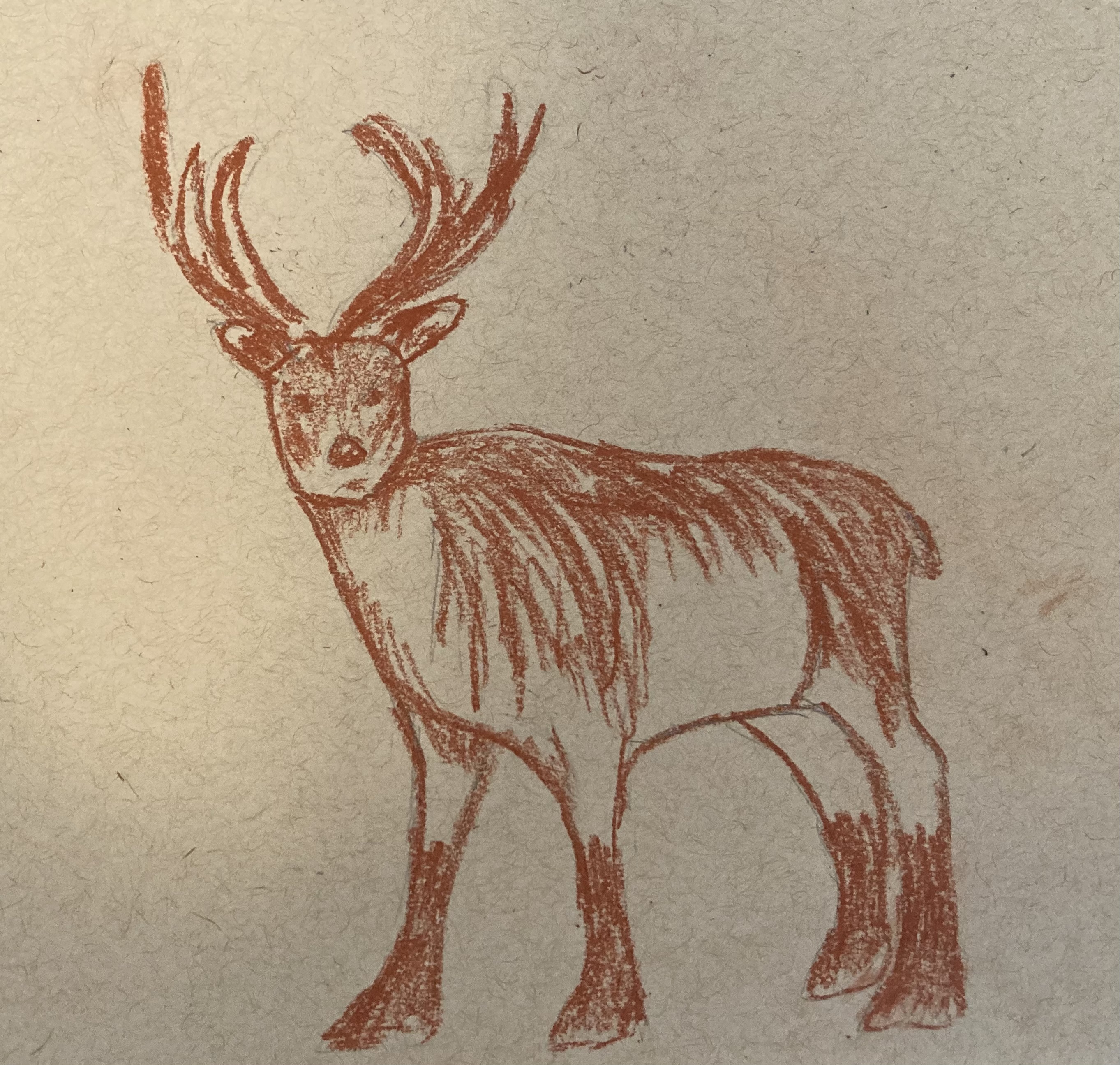
Shards of Glass: Meet the Characters: The Reindeer


“I am a magical creature, and here in my home I can feed on the cold, though in the city I must eat like you and everyone.”


“I’m sorry - I’m not a brave beast.”


The reindeer has been living in a walk-in closet for a long time. It’s not an ideal living situation, but it would be worse if the closet’s owners learned he could talk. He trusts Gerda with his story, and he’s happy to take her to the Snow Queen’s palace in exchange for his freedom, as long as he doesn’t have to face the Snow Queen himself.


See jennyprater.com for more information on Shards of Glass.

Tuesday, June 6, 2023

Shards of Glass


“When Gerda's neighbor and childhood friend disappears into the Mississippi, she refuses to believe he's dead. A spontaneous rescue mission leads her to a strange new land, full of fairies, trolls, and talking flowers. To find her friend, she must travel through this land, to a palace at the top of the world. But reaching the palace is only the beginning-she has to get him home again, too.”

My second novel, Shards of Glass, will be released on September 26, with preorders opening in early August. Shard of Glass is a retelling of Hans Christian Andersen’s The Snow Queen. Starting in not-quite-modern Minnesota, it follows seventeen-year-old Gerda as she chases after an old friend given up for dead by everyone else.

This is just a quick intro post - we’ll be talking more about both Shards of Glass and The Snow Queen over the course of the summer. Patrons will have access to most posts one week early.

Monday, August 15, 2022

New Project Announcement: Silence

I’ve discovered, through trial and error over the last few years, that it’s a lot easier to actually get writing projects done when I have people waiting to read them. Especially when I’m sharing the projects as I write them. And I don’t have a writing group or anything right now, and I never really know what to do with my Patreon, so I’m going to try doing this: 

I’m writing a story right now called Silence. I hope it will be novel-length, but I never really know until I get there. It’s about a mermaid. I would not call it a retelling of The Little Mermaid, but honestly, YMMV on that. Starting next week, I’ll be posting a chapter of this story on Patreon every week. (With possible occasional skipped weeks for holidays, real life interference, etc.)

Silence will be available for everyone, Patrons or not. Patrons will have access to each chapter five days early, and will also have access to occasional bonus content consisting of deleted scenes, outlines, previews, posts about inspiration, posts about the history of this story-type, etc.—basically whatever I feel like, TBH.

One important thing to note here: it’s much easier to stay motivated to write if I’m sharing as I go, but that only works if I know people are reading. So if you’re here, please engage with the posts. Like them or comment—it can be something simple like a heart or a smiley face, or something longer, and I’ll try to respond to any comments, but please keep any criticism constructive and polite. Remember, this is a rough draft that I’m sharing as I write it, and it will go through plenty of editing before standard publication is an option. I’m happy to hear about any issues you notice with the story, so I can make the next draft better, but remember to be nice! (Also, feel free to point out any grammar or spelling issues.)

You do not have to be a Patron to read Silence, but you do need to be a Patron for access to the bonus content. If you are not a Patron, do please consider following my page, which is free!

Chapters will post for Patrons on Sundays and for non-Patrons the following Friday. Bonus content will post whenever I feel like it. A proper summary/back cover blurb/whatever is coming soon. Unfortunately the layout of Patreon is not super convenient for posting writing (I would love it if I could set things up to feel a little more AO3, a little less LiveJournal), so I’ll try to set up some sort of master-post where you can access each chapter easily, but I’m not sure yet if that’ll work.

My Patreon is here.

Wednesday, November 3, 2021

The Book Is Here!

So the book came out yesterday, and I'm super excited. We've had several preorders, and some of you have gotten your copies already.

As of yesterday, the ebook is available to purchase directly from the Wax Heart site, which is a great option as it's the exact same file you'd get from Amazon/Barnes and Noble/wherever, but 100% of the cost goes directly to me.

I've been working on this book for a long time, and I hope you all enjoy reading it as much as I enjoyed writing it. The 13 stories are a mix of retellings and original fairy tales (well, as original as a fairy tale - or any story - can ever be). I've carried some of these characters in my heart for a decade or more, and it feels so weird to finally be sending them out into the world. I hope they do well out there.

Anyway! The Shoemaker Prince is available directly from Wax Heart Press, as well as from Barnes and Noble, Amazon, and pretty much wherever books are sold. (Or the websites of wherever books are sold, at least.) Buy your copy today!

Wednesday, October 13, 2021

The Girl With No Heart in Her Body

Long, long ago, in the days when dreams walked the earth, there lived a princess who was born with no heart in her body. 

Naturally, this caused much consternation among the court. It was decided, after a week, that a ruby would be taken to fill the hole in her chest.

The child grew, as children often do, and she grew into a wicked, selfish thing, her stone heart unmoved by any diversion.

The days turned to months and the months turned to years, and it came time for the princess to be wed. Many men would love a heart of stone, but there were none that a stonehearted maiden could love.

And there came a prince with a quicksilver soul, who always heard yes when he should have heard no.

He contrived to be alone in the princess’ bedchamber one night. She watched his coming with curiosity, for her heart was hardened to fear.

“Princess,” he said, “What sits beneath your breast? For I have heard men call you heartless.”

“I have a heart beneath my breast,” she answered him, “and it shines brighter than yours, by far.”

“Princess,” he said, “I must see this heart. Surely you are not afraid to show it to me?”

“I am not afraid,” the princess said, and she lifted her nightshirt up to her neck, to show the heart her parents had made her.

The prince forgot his lust for greed. He snatched the ruby from her chest, and stowed it in a pouch around his neck, and took himself quickly away.

The princess stared down at the hole in her chest for several minutes. Slowly, she dropped the hem of her nightshirt, and slowly, she put herself back to bed. No one had stolen her heart before. She did not know what to do.

In the morning, the princess found herself tired, and full of an unnamed sorrow, and she did not rise from her bed. Her parents worried, for their daughter was often up with the sun. But she would not rise, and she would not speak.  She would not eat, and she would drink only a little water, and that only when her father begged, for every hour that passed took her heart farther from her body.

On the third day, the princess roused herself, and she went to her mother’s jewel box, and tipped it over onto the floor.

The gold and silver she rejected immediately. She lingered over the jewels, sapphires and emeralds and diamonds. But all of these were wrong. She found a garnet broach, and thought, perhaps, perhaps. She found a pair of ruby earrings, and hope flared. But all of these were wrong.

Her heart was a stone the size of her fist. The earrings were each the size of a teardrop, and the garnet no bigger than her eyes, dry, for a girl with no heart could never cry.

The queen was not pleased to find her daughter had gone through her things. The queen was, in fact, altogether quite displeased with her daughter, and the king soon followed suit. For the princess would do nothing but lie abed all day, and refused to attend court functions, and refused to see any suitors.

And days turned to weeks, and weeks turned to months, and there came a dragon to lay waste at the north end of the kingdom.

“Perhaps,” said the king to the queen, “we will marry her to the man who kills the dragon.”

“Perhaps,” said the queen to the king, “but what man would have a wife who lies in bed all day?”

“Perhaps,” said the princess to herself, “the dragon has a jewel large enough to replace my heart.”

And so the princess resolved to save herself from this wasting illness that no one else could see. At first she thought she would ride out to meet the dragon, but her body grew weaker and weaker as long as her ruby heart was gone, for no one could live forever without a heart.

She thought on this for many days, and at last she went back to her mother’s room, and tipped over her jewel box again. She took from it as many things as she could carry, and then, giving up on her weak body, she filled the box again, and called a stable boy to carry it down, and tie it to the back of a large, reliable plow horse. She took herself slowly, next, down to the stables after the boy, and told him to tie her to the horse as well.

She pointed the horse’s large, fuzzy nose to the north, and let herself rest, secure in the stable boy’s knots. Her mother owned many, many fine pieces of jewelry, silver and gold and gems. If she was lucky, the princess thought, the dragon would smell the treasure, and come to meet her. She thought she could reason with a dragon; she still understood no fear.

The princess fell asleep on the back of the horse, and woke on the back of the horse, and drank a little from the skin of water the stable boy had filled for her. She slept again, and woke again, and so she passed many days, until the horse, plodding and reliable until now, suddenly reared up, dislodging princess and jewel box both, and galloped away.

She had reached the dragon’s lair.

The princess stood slowly. She was bruised from the fall, and tired, always tired now, ever since the theft of her heart.

“Hello?” she called. “Is there a dragon here?”

There was no answer.

“I have brought many small treasures,” she said, “which I would trade for one larger, if you are willing.”

A long, red snout emerged from the cave before her, and she stumbled hastily back, for the breath from its nostrils was hot and painful.

The dragon sniffed her. The dragon sniffed the treasure. The dragon said, in a low, rumbling voice, “You are dying, little princess. Why have you come to me?”

“I have come that I might not die,” the princess said. “My heart has been taken, and I would replace it from your hoard.”

“I do not hoard the hearts of girls,” the dragon said.

“I do not seek a heart of flesh,” the princess answered. At this, the dragon picked her up, long yellowed teeth clamped gently about her waist, and pulled her into the cave. After a moment, it went back outside for the jewel box.

“This treasure is not yours, I think.”

“It is my mother’s. She will miss it far more than she will miss me, for I am a heartless, unloving child.”

And the princess lifted her skirts up to her neck, and showed the dragon the hole in her chest. “Once I had a heart of stone,” she said, “but it was stolen by a prince with a quicksilver soul, and without it I think I shall die. Nothing in the box is big enough to do.”

She dropped her skirts and lifted her eyes, to see the shining jewels of the dragon’s hoard. Light from the mouth of the cave bounced from each bright surface to the next, but the princess knew no greed, only hope.

“Will you help me?” she asked the dragon.

The dragon knelt to rest her snout above the hole where a heart should lie, and the heat of her warmed the empty chest. “I will help you,” she said, and for the first time in her hard-hearted life, the princess knew joy.

“This evening I will find you a heart,” said the dragon. “For now, little princess, you must rest.” And she lifted the princess again, and laid her upon a sheep skin bed, and for the first time in her hard-hearted life, the princess knew peace.

When the princess woke, gems and jewels encircled her bed. “I have no red in my hoard,” the dragon said, “but perhaps one of these will do.”

They spent many days trying each jewel the dragon had, and when her hoard was finished, and a heart still not found, the dragon left the princess in her cave, and went out to discover new treasures. Days turned to weeks, and weeks turned to months, and each jewel took its turn in the princess’ chest.

Diamond-hearted, she felt sharp, and harsh, and cruel. She said things she did not mean, and the dragon followed her with wide, wounded eyes. With silver in her chest, she felt an unending chill—all the blankets and skins the dragon had gathered could not keep out the cold, which settled deep in her bones.

With a giant pearl in place, she felt distant from all the world, and uncaring, too. She saw no problem until the dragon plucked it from her chest, and she returned to herself again. The opal made her giddy and prone to mood swings, wildly happy until she was suddenly sad. She kept it for several days, clinging to a joy she’d never known before, until the side effects became unbearable.

“Heart transplants are hard,” the dragon said mournfully.

The princess patted her consolingly on the snout; the heart of gold had her feeling especially kind.

One night, as the princess slept with a rose quartz heart, a man crept into the cave. The princess woke as soon as he set foot inside, for rose quartz made her restless.

It was the quicksilver prince who had stolen her heart, and he wore it in a pouch tied about his neck. She could feel it from across the cave, fresh, as if it had just been ripped from her chest.

He carried a sword and a shield, as if he had come here to harm the dragon, her dragon, as he had harmed her. She reached beneath her dress and removed her rose quartz heart, for she wished to be herself at this meeting.

The moon emerged from behind a cloud, casting its light on the princess.

“Princess,” said the prince. “I’ve come to save you.”

“To save me,” she repeated. “And what would you save me from?”

“From the dragon,” he said. “Your parents are worried sick.”

“Sick, are they? Sick as I was when you stole my heart? As I was when I languished for months without it?”

He smiled, eerie in the glittering light of the cave. “When the dragon is defeated,” he told her, “I will give you my heart in return, and we will be wed before you father’s throne.”

The prince stepped forward, the princess stepped back, and the dragon raised her great head. “Who is this?” she asked, and the prince stepped hastily back again.

“This is the quicksilver prince who stole my heart. He has offered me his own in exchange.”

“Oh?” said the dragon. “And how would you like it?”

“Charred,” answered the princess, from the bottom of her lost stone heart. And the dragon opened her great mouth and breathed.

When the quicksilver prince was a pile of ash, and the princess’s heart sat shining on top, she bent to pick it up, brushing off the soot. She lifted her dress and placed it inside her waiting chest.

The princess gathered her mother’s jewels and the prince’s steed, and she returned to her parents’ palace.

“I am sorry I took your jewels,” she said. “My heart has been not softened, but warmed, and I must go home to my friend. You need not send more princes after me.”

Her parents did not understand, but parents often do not, and what they wanted, in the end, was to see their daughter happy. So she went back to her dragon, and lived happily there until the end of her days.


You can purchase "The Girl With No Heart in Her Body" and 13 other stories in The Shoemaker Prince, available from Wax Heart Press on November 2!

Wednesday, April 21, 2021

How To Buy My Books

So occasionally someone will ask me where to buy my books from/what format to buy so that I will profit the most from the sale. Which is such a sweet thing to ask! But the answer is sort of complicated. And I thought I’d just take some time today to go over why. 

The way I make the most money per book is definitely from sales of an ebook directly from waxheartpress.com. I actually make 100% profit on those books - every cent of the sale price comes directly to me.

I’m not actually sure how it breaks down from there, because frankly deals with retailers like Amazon and Barnes and Noble kind of confuse me. But I’d guess that next best is buying a hard copy of the book from Wax Heart Press.

The thing is, that’s only about money. And it’s not all about money. Because if you buy a hard copy, maybe someday when you don’t want it anymore it’ll wind up in a thrift store, and go home with someone who otherwise would never have heard of me. And there is just something sort of thrilling about seeing your very own book sitting on someone’s shelf, which you don’t really get from seeing it on their Kindle.

So that’s the two ways you can buy my books directly from Wax Heart; let’s talk about buying them from retailers like Amazon or Barnes and Noble.

I probably make slightly less money on a retailer-purchased physical book; I definitely make a fair amount less on a retailer-purchased ebook. But again, it’s not all about the money.

If enough people order my ebook from Amazon (especially if they leave positive reviews), Amazon will start recommending my book to people who’ve purchased something similar.

If enough people go into Barnes and Noble  (especially if it’s the same Barnes and Noble, or a few pretty close to each other) and ask the story to order in a copy of my book for them to buy, the store might start ordering a few copies to keep on shelves in case more people want it. And that means that a bunch of people who otherwise wouldn’t have heard of me will see it.

Different ways of buying my book are going to benefit me in different ways. But they’re all going to benefit me. And ultimately I’m just really happy that you want to read my book at all, however you buy it! (Just, you know, do buy it; don’t download it illegally or anything.)

Sunday, April 11, 2021

Lindworm: Chapter 1

(This is a little over half of the first chapter I had planned to share the whole thing, but then I realized it was 7,000 words. You can buy and read the rest of Lindworm here!) 

“Thank you so much for thinking of me,” Marit said, “but really I would rather not marry a monster.”

Marit would not have thought herself the sort of person to talk back to kings, had she ever had cause to contemplate such matters. But then she never would have thought the king the sort of person to sacrifice a girl to a lindworm, and yet here she was, the third victim.

She was only seventeen, and this wedding was a death sentence.

Six months ago, Prince Harald had set out to find a bride, and had been stopped by a great serpent in the road. Since then, the serpent—the lindworm—had eaten two foreign princesses, both after a sham of a wedding. Both women had thought they were coming to marry Prince Harald.

Here, in the forest outside the capital city, rumors had flown. Rumors that they would shortly be at war with both kingdoms that had lost a princess, and rumors, more interesting to their small family with no members likely to be sent to the battlefield, of the lindworm, of why a man-eating dragon would be welcomed to the palace and fed. Rumors that said the lindworm was Prince Harald’s brother, that the king humored it instead of killing it because the monster was family.

Marit didn’t know how much truth there might be to such rumors. She didn’t know how a queen could bear and birth a serpent, but she did know the world was full of strange, incomprehensible things.

The king stared at her, his men standing stiffly by. It had not, of course, been thoughtfulness that led him to her cottage in the woods. Marit knew this, and knew that the marriage was not optional, and that one could not speak to a king in this manner and expect to keep one’s head. But when one has already been sentenced to death, such things as respect for royalty matter very little.

“It is not an offer,” the king informed her when he found his voice. “It is a command, and you may choose to obey or not, but willing or unwilling, you will find yourself before a priest in my great hall one week from now.”

One week, she thought. One week to live the rest of her life. She could run—could she run?

No, if the king was leaving her a few days to say her goodbyes, it was only because he knew she could not run. There would be guards posted. She would be caught and brought back. She would still end the week dead, and likely her father and sister, too, if the king suspected they had helped her. As they certainly would.

Her family—they were away from the house now, deeper into the woods, scavenging. There was little left to eat, their winter stores almost empty by March, and the ground still too frozen to begin the year’s planting. She had stayed behind to tend to the animals, too likely to slow them down after twisting her ankle yesterday, falling from a tree; it had barely hurt, and would be healed by tomorrow. The king would be long gone before they returned, and it would fall to her to explain her upcoming death.

“There will be a bride price, of course,” said the king.

Marit wasn’t quite sure what a bride price was, thought it may be like a dowry—she’d sewn items, slowly, over the last several years for her dowry, but doubted the lindworm would demand her linens as well as her life.

The king went on to explain the bride price, the amount of money her father would be given for this farce of a marriage—the opposite of a dowry, then, and a staggering amount.

It had been a long, brutal winter following a short, dry summer, and for that price Marit may have volunteered herself. Any number of young women may have; it was enough to save not only their own small farm, but those of a few near neighbors. Enough to buy a second goat, a few more chickens, enough to pay all of their debts in the city and have their broken tools repaired.

For such a sum, she would have volunteered. She would have gladly given her life to so dramatically improve the lives of her father and younger sister.

But the king had not asked. The king had demanded, and Marit knew she would resent him for however many days she had left to do so.

He left her, as she’d expected, with guards posted nearby, and she led the animals back to their shed and let herself back into the cottage, not wanting to look at them, their clean uniforms with shiny brass buttons, their polished boots slowly gathering mud, their faces as they avoided her eyes, because they knew, must know, that this was wrong, and yet they were loyal to their king, and would not let her run.

~

Marit watched through the back window, working idly on her knitting, unable to stay focused on the difficult stitch she’d meant to master this week, until she saw her sister and her father coming out from the woods. She ran to meet them, and hurried them inside before they could ask about the soldiers scattered about. And then she told them.

“Why you?” Greta cried. “Why you?”

She hadn’t asked how he’d chosen her, out of all the unwed maids within walking distance of the palace. She didn’t think she wanted to know why it was her that must die, and not Annette, who had no father to protect her, or Martine, who was more beautiful, or Signe or Gretchen or any of the other girls she knew.

She didn’t want to die. She didn’t want to be the kind of person who wished death on her friends, either.

Besides, the lindworm had already eaten two women, and there was no reason to expect he might stop at a third. They may all be dead before this ended, Gretchen and Signe and Annette and Martine, and the younger girls, Greta and her friends, all the forest, all the city, someday all the kingdom sacrificed to satisfy the appetite of a monster that should have been killed the moment it showed itself to Prince Harald.

She could only hope that the fathers of the dead princesses would declare war, that they would kill her king and his lindworm with him before the whole country was devoured.

King Olaf had always been known as a kind and noble king. He’d lowered taxes and held festivals and been much loved, before these last six months, and Marit didn’t understand. She didn’t understand how a good king could become a bad one overnight because of one monster.

Maybe it was his son. Marit would throw the whole world over for Greta, she knew, but she’d been at Greta’s side since she’d emerged from their mother’s stomach, been the first to hold the new baby, tiny and wrinkled and red, getting blood all over her vest, as their father had said his goodbyes to Mama, only turning his attention to Marit and the new baby when his wife was gone.

For Greta, for her father, for Mama if she’d lived, Marit would do anything. But if a boar walked out of the woods and claimed to be her long lost brother, she wouldn’t take him at his word, wouldn’t escort him into the city to trample the blacksmith just because he asked her.

She didn’t think the king could hide a paternal relationship with a lindworm for several years. They must have met only when he stopped the prince on the road. And Marit didn’t understand.

She gathered Greta in her arms and listened to the younger girl cry, unable to shed any tears for herself, unsure why. She looked over Greta’s head at her father, and saw the same desperate sadness in his eyes that she had seen when she was five years old, and her mother was dying in childbirth. Her father loved her, but he could do nothing to save her, and they all knew it. He could not defy the king; to try would only make him angry, would likely risk Greta’s life too.

He came and wrapped himself around them both, and Marit thought, but was not quite sure, that he wept too. She sat, dry-eyed, between them, for long hours, until it was time for dinner and bed.

They watched out the window as a new group of soldiers marched in, and the first group left. At least they weren’t expected to feed and board their prison guards.

In the morning they found that the soldiers would let Marit go where she pleased, but one or two would always follow, from a respectful distance. No one followed her sister or father, so they went in three different directions, to the neighbors and to the city, Marit to make her farewells, and all of them to give warning. The king is feeding maidens to his lindworm. Marit is the first; she will not likely be the last. Send your daughters quietly to family in other cities, if you can. Marry them quickly to boys in the village, if you can. We do not know why the lindworm wants weddings, but he does, so make your daughters unweddable.

Gretchen, when Marit told her, said it probably had to do with a dragon’s fondness for virgins. She then said that if the king came to her, she would rid herself of virginity with the first man she could find before she would go to the lindworm, with the whole town to watch as proof, if necessary.

Gretchen’s older brother, the only other person there save the guards, too far away to overhear, made a sound of disapproval in the back of his throat, but said nothing.

Marit wondered if it was too late to try Gretchen’s plan for herself, and concluded it probably was—if the lindworm demanded a virgin, then the soldiers would not let her cease to be one. The small chance of success wasn’t worth giving herself to a man she didn’t want and wouldn’t be allowed to keep. And the kind of man who might cooperate with such a plan would likely not make it a happy experience to cherish in her final days. She reminded Gretchen of the soldiers before moving on to the next neighbors.

~

Marit spend her days wandering, mostly. There was work to be done, and she helped, or tried to—her father said not to trouble herself with anything in these last few days, and when she insisted, she often found herself too distracted to finish, or at least to finish well, haunted constantly by imaginings of what the lindworm might be like, how it might feel to be eaten. She remembered breaking a finger in a slamming door as a child, the sharp crack of it, the pain. She imagined the pain and the cracking both amplified as an enormous snake swallowed her whole, as snakes will do, and then, bizarrely, imagined cowering on a banquet table as the lindworm sliced her to pieces with a knife held in its tail, popping each slice into its mouth one at a time, sometimes dipping a slice in a butter-sauce first.

She still had not cried, though she had found herself several times laughing hysterically at humorless jokes she couldn’t explain. Greta didn’t need to know about the butter sauce.

When there were two days left before the wedding, she went out intending to collect eggs from the chickens, and her feet carried her, instead, deeper into the woods.

The guards followed at a distance.

Marit stopped when she saw an old woman ahead. She was short, with white hair spilling from her cap, bright and cheerful in a blue skirt and red vest, and she smiled like an old friend at Marit, and asked why she was so sad.

Marit wasn’t a fool. She knew how it was with mysterious old women in forests, knew they were to be respected. Knew how often they carried magic within themselves. Knew that to cross them was idiocy, and that to be kind and respectful could change the course of one’s life.

So Marit told the woman her troubles, and the woman smiled again. “It will be all right,” she said. “If you obey me, it will be all right. Now, here is what you must do.”

Marit wasn’t foolish enough to think she might live through this, but she wasn’t foolish enough to ignore the gift of a wise woman in the wood, either, even when that gift was the strangest advice she’d ever been given. Wear ten shifts beneath your dress, have milk and lye and whips waiting in your bedchamber.

She was already going to die; what did it matter if the king’s servants thought her a madwoman?

Ten shifts, though, would not be an easy thing to manage. Marit had two shifts, and two night shifts, which were wool instead of linen, with sleeves too wide to be hidden beneath her dress. She would have to rip them off. Greta owned the same, not much smaller as she was tall for her age, but Marit could not deprive her sister of all her undergarments, so only took one day shift and one night shift from her. That brought her to six, and four more yet to find. She couldn’t buy them; the king’s money wouldn’t come to her father until the day after the wedding. She had her dowry linens, unneeded now, and could use the fabric to make more shifts. But she had two days left to live, and wasn’t willing to spend her last precious moments sewing. With Greta’s help she converted one white bedsheet into a shift, but would sacrifice no more time when she had so many goodbyes to say—to friends, to livestock, to trees and streams and every future she had ever imagined for herself.

She begged one more shift from Olga, whose family was wealthier and who had one to spare for an acquaintance going to her death. Eight shifts, eight, two short, and no time to find more. It would have to be enough.

~

The morning she was to be taken away, Marit’s father pulled out her mother’s wedding dress and offered it to her.

Marit shook her head. “It should go to Greta. To a real wedding.”

“You shouldn’t be alone,” her father said. “Take it, so your mother can be with you, as Greta and I cannot.”

So Marit put on her eight shifts, and she put on the dress. She was a bit smaller than her mother had been when she married, and it still fit despite the extra layers. Greta had wanted to make her a crown of flowers to match, but there were still few flowers in bloom, so she wove the crown from evergreen branches instead, coating her hands in sap, and placed it carefully on her sister’s head.

The three of them waited, solemnly, for Marit to be taken away. There was nothing left to say. All of the goodbyes were finished, all of the plans made. The next morning someone would come from the palace with the bride price and whatever was left of Marit to be buried. Her father would sell the animals and the house, give them away if he couldn’t sell them fast enough, and he would hire a wagon to take them far, far from the capital, to start a new life where the lindworm would never touch Greta. They’d gone over the details last night. Greta had cried again.

Marit still hadn’t cried, and thought she might be able to, now, but would not let herself; she didn’t want her tears seen by whoever took her away. She found she was more angry than sad. She felt a sharpness growing within her. Her life was forfeit, and so too was her sense of obligation to respect, to loyalty. The king, the queen, the prince, the priests who’d performed the weddings and the soldiers and couriers who’d stood by—damn them, she thought, damn them all, and damn the idea she owed them the barest amount of anything.

The king came to fetch her himself, and she refrained from spitting in his face only because of the guards that surrounded him, the fear they might kill her where she stood and cost her father the bride price.

The king was different, not angry and demanding as he had been a week ago, but stiff with an awkwardness that might almost be shame. Marit hugged her father and Greta one last time, and followed him back toward the city, his guards forming a circle around them. She didn’t care that he may feel shame; she had enough anger by now for the both of them.

He was quiet, and Marit didn’t want quiet. Not quite understanding the compulsion, she found herself goading him.

“What will happen after this?” she asked, and the king looked at her, then quickly away again. It was a long walk on foot, and she didn’t know why a king wouldn’t take a carriage, but she didn’t mind the extra time in her forest.

“You will be prepared for the wedding by lady’s maids. The wedding will be in the great hall, and after that we will have a banquet.”

“Not tonight,” Marit said, spurred by the thought of Annette being sent hundreds of miles away to an uncle she’d never met, of Gretchen searching for a man to defile her rather than be eaten. “Not to me. What will happen to your kingdom? After me, you’ll kill off every maid in the country, and then I suppose you’ll have to go to war, and find slaves to feed his appetite? Discipline is important for growing boys, Your Majesty. Learn to say no to your son.”

He raised a hand as if to slap her, and she tilted her chin forward, daring him—let him hit her, here surrounded by a small army, let all these soldiers, already uneasy with their roles, go home and report to their friends and families that their king was a man who struck defenseless maidens.

He lowered his hand, leaving Marit oddly disappointed. It would have been another reason to be angry, and her anger was protecting her from her fear.

The king sighed heavily. “We all do foolish things for our children.”

She wondered if he meant the lindworm, or only Prince Harald, who could not be married until it was satisfied. It didn’t matter—the result was the same for her.

“Yes, Your Majesty,” she said, suddenly exhausted. Maybe a king could afford to do foolish things for his children. Her own father had to be sensible—foolishness would only have hurt Greta. She felt the anger draining away, the fear rising up again. She didn’t want to die.

~

They arrived at the palace from a side gate, not taking the wide, paved road beneath the cherry trees, where any number of people might have seen their arrival. The king and his soldiers handed her off to a large group of women, some more elegant than others, and she asked him, before he left, what time the wedding would be.

“At eight o’clock,” he said. “Will that give you enough time to prepare?” One of the more elegant women assured him it would, and he told her, “Give the girl whatever she wants. It’s her wedding day, after all.” He laughed, unamused, more bitter than cruel, and then he was gone.

“Is there anything special we can do for you, miss?” asked one of the plainer women, who was likely a maid.

Marit thought of the old woman in the forest. “This is going to sound a little strange.”

All of the more plainly dressed women left to carry out her last request, leaving Marit with a flock of beautiful women whose most simple everyday clothes were likely ten times more expensive than her mother’s wedding dress. They tried to have her out of it, into borrowed silks instead, but she refused. It was the last gift from her father, the only familiar thing in this place. She kept her evergreen crown as well, but let them take it away long enough to clean away the sap, rubbing it from the branches and brushing it out of her hair.

They re-braided her hair into a more elaborate style, stringing in gemstones to match her dress, and applied powders and creams to her face, which itched and made her sneeze. She watched them carefully, picking out one who seemed both kind and fancy enough to know little of a peasant’s daily life. She drew her away from the crowd and explained, in a whisper, “I haven’t any underthings. I only own the one shift, and I left it for my sister, so she would have one to wear on laundry day. I didn’t think it would matter, when I’m only to die tonight, but I’m—I’m embarrassed to have all these fine people watching me, thinking that if the light hits just so they’ll see I’m not dressed properly.”

The woman believed, somehow, that a peasant girl might have come to a royal wedding with no undergarments, and offered to find a spare shift.

“Could I have two, please?” The woman raised her eyebrows, and Marit ducked her head. “It’s a tradition—I know it shan’t be a real wedding night, but it’s a tradition to make the groom work a little harder the first time.”

The woman believed the tradition she’d never heard of, as well, and came back shortly with two more shifts, beautiful, silken things, bringing Marit to the required ten.

The next problem came when she realized the women had no intention of leaving her alone while she took off her wedding dress and put on the shifts, which was awkward for more reasons than the eight shifts she already wore. She explained that she was not accustomed to being seen undressed by strangers, and finally they left her, for the first moment of privacy she’d had in hours, and the last she expected to have in her life.

She took off the dress and put on the shifts. She paused to look in the mirror—a thing she’d heard of but never before seen—and wondered if that was what she truly looked like, or only the effect of the powders and creams. She pulled the dress back on, took a few deep breaths—she had not cried yet, she would not cry now—and reopened the door so that the women could help re-fasten the dress in the back.

They set the evergreen crown back on her head, and took her to the priest that would read her last rites.

The hall where they held the wedding was gorgeous, with shining wood floors and dark walls covered in rosemåling, blue and gold and red. All the court was seated when she arrived, dressed in their finest clothes, looking horrified. She recognized the king and the queen and the prince, familiar from a dozen parades, sitting in the front row. The rest were strangers.

And then she saw the lindworm.

It was the height of six or seven men, white like a maggot, or the mold on stale bread. It had dark wings on its back, too small to hold its weight in flight, and shiny white fangs quite visible even when its mouth was shut. It had no legs. There was a crown balanced at the top of its head, the size a man would wear, which might have been funny if it hadn’t planned to eat her.

It was staring at her with an expression of mild curiosity, recognizable because its eyes were the eyes of a man, over-large, but still small in its serpent head, the same shade of blue as a dozen young men she’d seen in the city.


Sunday, March 14, 2021

Prince Lindworm: Version Comparison

Over the years, I have managed to find three different versions of King Lindorm—the one that appears in Svend Grundtvig’s Gamle Dansk Minder i Folkemunde, the one that appears in Andrew Lang’s Pink Fairy Book, and the one that appears in the Folio Society’s East of the Sun and West of the Moon. (There is no indication of where this story came from originally or who translated it, so we’re just going to call it the Folio version here.)

 I’ve talked a lot before about the origins of this story; the earliest version, Grundtvig’s, is from Denmark. The Folio Society attributes theirs to Asbjørnsen and Moe, in Norway, which we know is incorrect as it doesn’t appear in any other edition of their work. Lang attributes his version to Sweden.

So today, we’re just going to work our way through the three versions and compare/contrast. 

They all start the same way. Queen wants baby, queen can’t have baby, old woman tells her how to make it happen. Lang’s version deviates most from the others in the beginning. In the other two versions, the queen encounters the old woman while out on a walk; in Lang’s, the old woman comes to the palace and seeks out the queen specifically to impart her wisdom.

In both Gruntvig’s version and the Folio version, the queen is to eat only one of two differently-colored roses that will grow up overnight under a two-handled cup left in the garden. Very specific, perfectly identical. The lindworm comes because the queen eats both roses.

In Lang’s version, the queen is to take a bath in her room. Two red onions will appear under the bathtub afterwards, and she is to peel and eat both. Her mistake is that she eats the onions without peeling them. (Note that in this version the queen is not given the option to choose the gender of her child.)

Another little deviation in Lang’s version is that the queen apparently doesn’t know she’s given birth to a lindworm? Her waiting woman tosses the lindworm out of the window as soon as it’s born, and the queen doesn’t notice it at all.

Lang and Folio both feature a normal, human prince born after the lindworm. In Gruntvig’s version the lindworm is an only child. Since Gruntvig’s version has no siblings, he approaches the king directly to ask for a bride. In the other two, he waits until the prince goes out to find a bride, and then goes up to him and says, “Hey, I’m your secret brother, and since I’m older, I get to get married first.”

Here, again, Lang’s version deviates significantly. The other lindworms both marry (and eat) two foreign princesses, then a local shepherd’s daughter selected by the king. Lang’s lindworm marries and then eats an unspecified number of slave women before a wicked stepmother offers up her stepdaughter as a bride. Specifically, she tells the king that her stepdaughter would like to marry the lindworm, and the king apparently doesn’t question this? He for some reason finds it believable that a young woman would volunteer to marry a monster who’s already eaten multiple previous wives, without asking for any kind of compensation for her family or anything?

And, okay, Lang is going full German-Cinderella here. After the stepmom screws her over, girl goes to her mom’s grave, where she’s given three nuts. This is what happens in the place of her meeting an old woman and getting instructions in the other two versions.

Lang’s main girl goes through similar basic wedding prep steps to the others, with no indication of where she got the idea from; while the other girls have a tub of lye, tub of milk, whips, and ten gowns/shifts, Lang’s girl has the tube of lye, only seven shifts, and three scrubbing brushes. After they go through the whole take-off-your-shift-take-off-your-skin situation, Lang’s girl just, like, scrubs all the lindworm-iness out of him? She just scrubs until he turns into a dude.

The other two versions, of course, have the much more complex and disgusting transformation sequence of dip whips in lye, whip lindworm, dunk lindworm in milk, take lindworm to the bed, embrace.

The Folio version ends immediately after this, with the girl and the transformed prince living happily ever after. The other two stories continue.

In the second half of Lang’s version, the old king dies, the lindworm becomes king, the lindworm goes to fight in a war, and the girl’s stepmother steals a bunch of letters and tells a bunch of lies that result in the girl and her two young sons fleeing the palace until the lindworm comes to find them. During this time, the girl uses her magic nuts to save a man named Peter.

In the second half of Gruntvig’s version, the old king and the lindworm both go off to war, it’s a character called the Red Knight who switches the letters, and while she and the babies are away, our girl somehow uses her breast milk to help two other men who’ve been transformed into animals? IDK, I don’t have a full English translation yet, but what we do have to work with is seriously weird.

Lang’s version definitely deviates significantly from the others; it has no points in common with Grundtvig’s aside from the most basic plot—barren queen, ignoring food instructions=lindworm, brides eaten, transformation involving shedding/undressing and lye, heroine flees into the woods with children due to mail-tampering, saves someone else before reunion with lindworm.

The Folio version deviates from Grundtvig’s only in that it ends halfway through and includes a second prince.

Today is the first time I’ve read through Lang’s version in several years, at least, and somehow, despite its differences from the others, it feels the least unique? I was definitely first drawn to “Prince Lindworm,” as a child, because despite falling into my much-beloved Enchanted Bridegroom category, it felt very different from any other story I’d read. The beast as a snake-like creature, the brides being eaten, the unsettling transformation sequence—it was all just great. This was the Folio version, that I was reading as a child. But when I first encountered the second half of the story in Grundtvig’s version, it was also delightfully unique and bizarre, even if I can’t fully understand it. The lindworm’s mother—the girl’s mother-in-law, often a villainous figure—is 100% on her side, and the main person to try to help her through what happens next. And the milk situation is just—well, it’s something.

Lang’s version, despite being the same basic story, just feels bland and unoriginal. There’s an evil stepmother, which is just, sort of cliché, you know? The transformation sequence has been cut down and seriously sanitized. And then the situation where he marries an unspecified number of slave women in the place of two princesses—well, I have a number of issues with that.

Firstly, the number three is so often symbolic in fairy tales, and to replace the three total marriages with an unspecified number is lame, but that’s a dumb, nitpicky issue. The marriages to slave women indicate that this is a country that holds slaves, which I don’t love. But my big issue with this is that a significant part of the charm of the other versions is just the absolute, idiotic absurdity of marrying your monster son to a second princess after he eats the first. Like, you know what’s going to happen now—the same thing that happened last time. He’s gonna eat the princess and another powerful king is going to be rightfully angry with you. Marrying him instead to someone who won’t be missed lowers the stakes and raises the rationality in a way that bores me, and also implies that some potential brides are worth less? Like, with the first couple brides as princesses, we know they matter even though we never properly meet them, because their deaths put the threat of war over our heads—which is probably why the king and the lindworm go off to war shortly after the spell is broken in Grundtvig’s version. “A whole bunch of random slave girls died with no consequences and then we met our main character” just seems sort of…cheap.

So! While I did enjoy reading Lang’s version, I don’t think I would have fallen in love with this story if it was the first I encountered. I think the other versions are both more absurd and more meaningful.


Preorder my book based on this story here!

Wednesday, March 10, 2021

Lindworm cover reveal!


When a lindworm comes to the palace and begins demanding—then eating—brides, Marit is the third victim chosen to marry him. Against all odds, she survives her wedding night, but the trouble has only just begun. Separated from her family, bound to a traumatized prince who doesn’t know how to be a man, Marit must protect her unwanted husband from his family, from his enemies, and from himself.

Preorder here!

Tuesday, March 9, 2021

Workshop Recording Repost

 As you probably know by now, my novel Lindworm will be released on April 13, 2021. Over the next few weeks I'll be sharing a lot of different things related to this, including the first chapter!

I've shared the first chapter of this story before, on the blog, and also at my university library. The chapter has changed a lot since then, so I'm not going to repost the original, although you can certainly find it yourself if you're interested. However, I thought it might be cool to post the library video again!

Remember, the chapter's undergone significant edits since this recording; the current version will be available soon. This is a long recording, featuring readings by several other authors that I took a class with. My part starts at 44:00.


*You can preorder Lindworm here!*

Monday, March 8, 2021

Lindworm Promo Series Repost: My Story

 *This is a repost from 10/8/17 with minor edits*


The curse is broken, but the transition from beast to prince isn't always that easy.

After the lindworm is defeated, Marit expects to go back to her normal life. But two princesses are still dead, and two wars are still brewing, and Marit is (technically) still married to the lindworm. Or Prince David, as they’re calling him now.

The thing about Davey is that he’s hopeless—and who can blame him? He spent the first two decades of his life as a giant snake. He doesn’t know what to do with legs. He doesn’t know what to do with hands. He doesn't appreciate the fact that he has to chew his food now. All of this, in addition to the fact that his dragon instincts have been replaced with a human conscience, leading to overwhelming guilt over the two princesses he ate.

All Marit wants is to go home to her father and sister. But instead she finds herself deeply embroiled in palace intrigue, trying to save a depressed, inept prince from himself and everyone around him.


*You can pre-order my novel Lindworm here!*

Saturday, March 6, 2021

Lindworm Promo Series Repost: Cite Your Sources

*This is a repost from 9/17/17* 


I first read Prince Lindworm in a collection of Scandinavian fairy tales illustrated by Kay Nielsen, who, by the way, is awesome. The problem here is that it was a later edition of the book. At some point, I don’t remember why, I got super into finding out the history of Prince Lindworm. See, it was in this book, which was supposed to be stories from Asbjornsen and Moe. Those are the big Norwegian fairy tale dudes, for those of you who don’t know.


But I’m a little obsessive about my fairy tales. You may have noticed. And this book wasn’t even mine. It belonged to my grandparents. So of course I had my own Asbjornsen and Moe anthology. Or two. Maybe three. And I kind of kept buying these books because I wanted my own copy of this one wacky story. But it wasn’t there. So I googled the complete works of Asbjornsen and Moe. It wasn’t there.

I took advantage of my university’s interlibrary loan system to request every single book in the country that mentioned lindworms. Or lindorms. Or lindwyrms, or a variety of other spellings.

Have I mentioned that I’m a little obsessive about my fairy tales?

Several other books and authors and random people on the internet attributed the story to Asbjornsen and Moe. Who definitely didn’t record it. The reason for this, as far as I can tell? This book my grandparents had, really nice hardcover, fancy publisher, gorgeous illustrations—it was kind of a big deal. All sorts of people had read the story in this book, and only this book, and assumed the information provided was reliable.

And here’s where the publishers went wrong. There’s an editor’s note in the front. It explains that all but two of the stories in the volume are from one particular translation of the works of Asbjorsen and Moe. What they apparently neglected to mention is that one of those two stories was not only from a different translator, but a different source entirely.

So Prince Lindworm didn’t come from Norway. That’s settled. And, okay, I don’t know what to tell you about the one random outlier in my interlibrary loan adventure that said the story was from Sweden, but I’ve got this worked out.

Really, it could have been worse. When I wanted to read the earliest recorded version of Beauty and the Beast, and I couldn’t track down a translation anywhere, I spent months tearing the internet apart before I found a copy that was clearly printed well over one hundred years ago, given the spelling and lettering, in French, scanned in and saved as a pdf. I still have that saved on my computer somewhere. Given that I don’t know any French, dictionaries only provided modern spellings, and any given character could easily have been three to six different letters in that typeface, the several months I spent attempting to translate didn’t really get me anywhere. I don’t think I even translated the first paragraph successfully.

I did a little better with Prince Lindworm. It still took me a couple months to find the text, and it was still a crappy pdf with outdated spelling. Plus it was in Danish. But the lettering was slightly more modern, and I happen to be much better at slogging my way through Danish than French. A little bit of Norwegian, a little bit of Anglo-Saxon, a tiny bit of German. It’ll get you places. Sadly, my extensive background in Latin was utterly useless to French. (And Spanish. It seems my teachers lied to me. I strongly suspect Romani and Portuguese would also be a bust, but at least I can stumble blindly through basic Italian.)

It was, when I found it, three or four pages of a quite large collection. I haven’t gotten into the rest of it yet—soon, hopefully. Gamle dansk Minder i folkemunde, it’s called.  I’m good at general ideas in Germanic languages, not so much actual translations, so bear with me here, but I’m going to tentatively call this “Old Danish Memories from the Mouths of the People.” Sounds better in Danish, right? This is why I keep my translations to myself.

The compiler of this book is listed as Svend Grundtvig, and he’s generally known for collecting Danish folk songs, but as far as I can tell, in my admittedly spotty Danish comprehension, there’s no music for this one.

And, okay, I know I talk a lot about how stories, especially folk stories, don’t belong to anyone, because they’re so mutable, because a story is really a community, a conversation. But that doesn’t mean I don’t want to know where the conversation started.

For crying out loud, people, cite your sources! I dedicated months of my life to this. Do you have any idea how many utterly worthless books I had to read in search of some tiny hint of origins? How many incorrect attributions I had to read? How much respect I lost for researchers in this field in general?

Look, sometimes tracking down crap pdfs of source material can be fun, okay? I love pulling random linguistic data from obscure folklore and stuff like that. But really. Really. How hard can it possibly be to say, “hey, this historically and culturally significant story that I’m making a profit on because it’s been in the public domain for a hundred years originally came from Denmark”?

There is no excuse not to give fairy tales the correct attribution. Like, anthology and picture book based fairy tales have got to be the easiest writing to make a profit on.  The story has been marinating in your brain forever, right? Do you even remember a time before you knew Cinderella? Just tell it in your own words, and someone else will come along and slap some beautiful illustrations on, and you’re good to go. It costs five minutes and zero dollars to add in a little note saying, “This adaptation was inspired by the French version of the story as recorded by Charles Perrault.”

But no, that’s too much work for you. Instead you’ll just go and publish a wildly popular book that heavily implies incorrect information, and let it spin wildly out of control until poor innocent college kids are staying up all night on the internet reading languages they don’t understand and enlisting the help of just about every library in the continental United States.

Ugh.

Anyway, Grundtvig is a really awesome dude who absolutely knows how to cite his stories. Kong Lindorm was told in 1854 by Maren Mathisdatter, age 67, in Fureby. It was recorded by Adjunct A. Levisen.

See? Was that so hard?


*Remember to support me on Patreon!*